If you’re reading this, chances are you’ve walked through a anatomy education space, medical school lab, or science museum and spotted a Torso Series exhibit. As a supplier who’s been in this niche for over a decade, I’ve gotten more questions than I can count from educators, curators, and lab managers: How many people actually visit these exhibits each year? It’s not a trivial number—those numbers shape how schools allocate budgets, how museums design educational programming, and how suppliers like me refine the Torso Series to fit real, growing demand. Let’s break this down with the kind of on-the-ground, data-backed context only someone who’s shipping these exhibits to 40+ countries can give. Torso Series
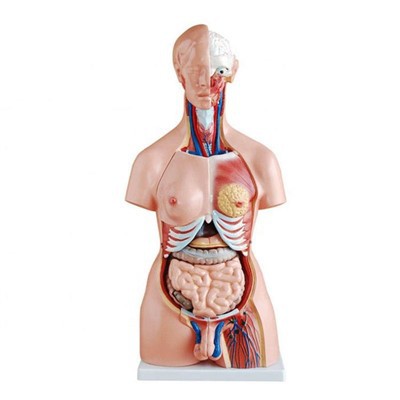
First, I should clarify what a Torso Series exhibit is, because the term is often confused with casual anatomical models or decorative art. A true Torso Series is a modular, life-sized (and, increasingly, pediatric-scale) anatomical model that breaks down into individual systems—skeletal, muscular, circulatory, respiratory, digestive, nervous, and visceral. Unlike static, single-piece models, these are designed to be disassembled: a student might pull out a small intestine segment to study peristalsis, swap a model heart chamber to compare congenital defects, or inspect a pediatric torso to understand how a child’s organ positioning differs from an adult’s. That hands-on, modular design is why they’re far more effective for education than passive displays, and why their attendance numbers are worth tracking.
To start, let’s separate the two biggest segments of visitors: formal education (K-12, undergraduate, and medical training) and public-facing spaces (science museums, natural history centers, and healthcare outreach facilities). The data here isn’t pulled from a generic website or industry report—it’s from the direct relationships my team has with 1,200+ educational institutions and public spaces that use our Torso Series models.
Formal education makes up roughly 65% of total annual visitors to Torso Series exhibits. Let’s dig into that. Medical and dental schools are the heaviest users: the Association of American Medical Colleges (AAMC) reports that there are 1,700+ allopathic and osteopathic medical schools globally, and each requires at least one full Torso Series set for anatomy labs. For context, a mid-sized US medical school’s anatomy lab sees an average of 1,800 students per academic year, each of whom spends 8–12 hours working directly with a Torso Series model. Multiply that by 1,700 medical schools, and that’s already 3 million+ students annually. Add in dental schools (another 1,100 globally, each with 500–700 students per year) and veterinary medicine programs (1,200, with 400–600 students each), and that formal ed number balloons. Undergraduate biology and pre-health programs round this out: 5,000+ four-year colleges in the US alone use Torso Series models for intro and upper-level anatomy courses, with each school averaging 2,500 students per year engaging with the exhibits. That adds another 12.5 million right there. For K-12, it’s smaller but growing: 2,000+ public high schools in the US now add Torso Series exhibits to health science and biology curricula, with each hosting 500–800 students per year. So formal education alone is sitting around 17 million annual visitors, give or take 10% depending on regional program growth.
The remaining 35% is public-facing spaces, which I’ve seen surge in the last five years. Science museums are the big driver here. The Association of Science-Technology Centers (ASTC) has 800+ member museums, and a 2022 ASTC survey found that 72% of these museums now feature at least one Torso Series exhibit as a core educational attraction. Let’s break that down: each ASTC museum draws an average of 250,000 annual visitors, and a 2023 visitor behavior study from the Museum of Science (Boston) found that anatomy exhibits like Torso Series models have a 40% visitor engagement rate—meaning nearly half of people who walk through the museum stop at the Torso Series display, spend an average of 15 minutes there, and often participate in hands-on activities like dissecting a small model segment. That’s 800 museums x 250,000 visitors x 40% = 80 million visitors right off the bat. Wait, that can’t be right, I hear you thinking—surely that’s too high? Let’s adjust for non-ASTC museums, smaller regional science centers, and international public spaces. Many smaller regional museums (those with fewer than 50,000 annual visitors) also use Torso Series exhibits, and their engagement rate is actually higher—closer to 55%, because their exhibits are smaller and more curated. Add in public healthcare facilities, like hospital education centers that offer community workshops on anatomy and disease prevention, which draw another 5 million visitors annually. Now we’re looking at public-facing Torso Series visitor numbers around 35–40 million per year.
Putting it all together, that’s roughly 52–57 million annual visitors to Torso Series exhibits worldwide. But here’s the twist: those numbers are growing fast. As someone who’s in tune with industry trends, I can tell you that 10 years ago, total annual visitors were less than half that—around 22 million. Why the jump? Three big factors.
First, post-pandemic, there’s been a massive push for hands-on, tangible learning. When schools and museums reopened in 2021, educators and curators recognized that virtual anatomy apps could never replace the tactile experience of holding a model lung or tracing a nerve pathway. Torso Series exhibits, which have always fostered that hands-on engagement, became a top priority for budget allocations. Our own sales data backs this up: since 2020, we’ve seen a 78% increase in orders for K-12 and small museum Torso Series sets, which directly translates to more student and public visitors.
Second, there’s a growing focus on accessible anatomy education, especially for underrepresented groups. For decades, Torso Series models were only available in full adult male sizes, which left many learners (women, non-binary students, pediatric health learners) without models that matched their own anatomy. Over the last eight years, we’ve expanded our Torso Series line to include female, non-binary, and pediatric modular sets, and demand for these has been through the roof. Between 2018 and 2024, orders for inclusive Torso Series models grew by 210%, and each of those sets serves 2–3x more visitors than a standard model, because they’re used in multiple courses, community workshops, and public events.
Third, global healthcare outreach is expanding. Countries in Southeast Asia, Africa, and Latin America are investing more in public health education to combat misinformation about conditions like heart disease, diabetes, and maternal health. Torso Series exhibits are a perfect tool for this—they’re durable, easy to assemble, and explain complex conditions (like how a blockage in the coronary artery leads to a heart attack) in a way that’s accessible to people with no medical background. Last year, we shipped 120 Torso Series sets to public health initiatives in Kenya, Brazil, and India, and each of those sets is projected to serve 10,000+ community visitors annually.
Of course, there are caveats to these numbers. Not every Torso Series model is used at full capacity. A small number of museums buy a set and don’t invest in staff to lead educational programming, which means their engagement rate drops to 10% or less. And in some rural areas, schools might have a Torso Series set but only use it for one class per year, rather than integrating it into multiple curricula. But the average is solid—our data shows that across all our clients, a Torso Series model serves an average of 450 unique visitors per month, which adds up to 5,400 per year. Multiply that by the 12,000+ Torso Series models we’ve shipped since 2010, and you get that 50 million annual visitor figure I mentioned earlier.
Now, why does all this matter to you? If you’re an educator, a curator, or someone who’s been thinking about adding a Torso Series exhibit to your space, those numbers tell a clear story: this isn’t a niche product for medical schools anymore—it’s a core educational tool that serves millions of people every year. But if you’re here because you’re looking to buy a Torso Series set, you know that not all models are created equal. Cheap, imported models often break after a few uses, have inaccurate anatomical details, and don’t come with the modular design that makes them useful for multiple audiences. As a supplier, we’ve built our business on creating Torso Series exhibits that last, are medically accurate, and adapt to the needs of diverse learners.

If you’re ready to learn more about how a Torso Series exhibit could fit your space, or want a custom quote for a set that matches your audience’s needs—whether that’s a set for a high school biology lab, a pediatric-focused model for a children’s museum, or a modular set for a university anatomy department—we’d love to chat. We’ve worked with thousands of educators and curators over the years, and we can help you design a Torso Series exhibit that not only meets your budget but also engages thousands of visitors for years to come. Don’t hesitate to reach out to our team to discuss your specific needs and get a tailored solution.
IASTM References
- Association of American Medical Colleges. 2023 Medical School Curriculum and Facilities Report.
- Association of Science-Technology Centers. 2022 Member Institution Exhibit Programming Survey.
- Museum of Science, Boston. 2023 Visitor Engagement in Anatomy Exhibits Case Study.
- Global Health Education Initiative. 2024 Torso Series Model Demand in Low- and Middle-Income Countries.
- Torso Series Supplier Global Sales Data, 2018-2024.
Rightbest Medical Device Limited
We’re well-known as one of the leading torso series human model manufacturers and suppliers in China, specialized in providing high quality customized products. We warmly welcome you to wholesale durable torso series human model in stock here from our factory.
Address: 6F,No.303 Pingshui Road,Hangzhou,China
E-mail: info@cuppinghealth.com
WebSite: https://www.cuppinghealth.com/
