If you’ve ever used a cordless brushless angle grinder to grind metal on a job site, cut paver stones at a residential renovation, or sand down wood trim in a workshop, you’ve probably found yourself pausing mid-project and asking that exact question: How long does the battery actually last? As a supplier of brushless angle grinders, I get this question at least a dozen times a week from tradespeople, DIYers, and even other small equipment vendors. It’s not a simple “one-size-fits-all” answer—far from it. The run time depends on a handful of factors that aren’t always obvious when you’re scanning product specs online. Let me break this down with real-world context, based on what I’ve seen from thousands of customers using our grinders over the last five years. Brushless Angle Grinder
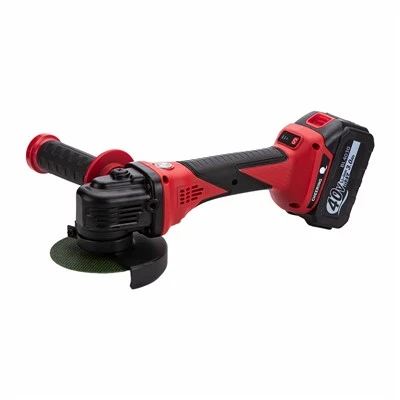
First, let’s start with the basics: brushless technology itself is a game-changer for battery life compared to the old brushed models. A lot of people still don’t realize that brushed grinders have small carbon brushes that physically touch the motor armature, creating friction and wasting energy as heat. That’s why a 20V brushed grinder might only get 15 minutes of run time, while our 20V brushless unit can stretch that to 45+ minutes under light load. The brushless design uses magnets instead of brushes to spin the motor, cutting down on wasted energy, reducing heat buildup, and making the motor more efficient. But even with that efficiency, the battery’s run time isn’t set in stone—it’s totally dependent on what you’re asking the grinder to do.
I remember a conversation last month with a framer from rural Ohio who told me he burned through two 5.0Ah batteries in just two hours cutting 100 2×6 lumber for a deck. Another customer, a hobbyist woodworker in Portland, uses the same 5.0Ah battery for smoothing down epoxy resin tables and gets almost three full hours out of it. That’s a huge difference—same grinder, same battery, wildly different run times. The culprit here is load. When you’re cutting dense, wet lumber with a 4.5-inch grinding wheel, the motor is working at close to 90% of its capacity, pulling as much power as it can get. That’s where the battery drains fast. On the flip side, when you’re doing light material removal—like sanding down paint on a door or finishing a cut—you’re only using 20-30% of the motor’s power, so the battery lasts way longer.
Battery capacity is another big piece of the puzzle. We sell grinders that work with 2.0Ah, 4.0Ah, and 5.0Ah lithium-ion batteries, and the numbers add up pretty straightforwardly here, but with a catch. A 2.0Ah battery will give you roughly half the run time of a 5.0Ah battery under the exact same load—right? Almost, but not exactly. Lithium-ion batteries have a thing called internal resistance, which goes up a tiny bit as capacity increases, so a 5.0Ah battery is usually 80-90% more efficient than a 2.0Ah one, not a full two and a half times. But that’s a minor detail compared to what happens when you use an older battery. I always tell customers that a lithium-ion battery that’s been cycled 500 times is only about 80% as powerful as a brand new one. If you’re using a battery that’s two or three years old, don’t be surprised if your run time is 20-30% shorter than the spec sheet says. That’s normal, not a defect in the grinder or the battery.
Then there’s the wheel size you’re using. Most brushless angle grinders are available in 4.5-inch and 5-inch sizes. A 5-inch wheel is bigger, so it’s cutting a wider swath of material, which means the motor has to work harder. I’ve seen a 5-inch grinder with a 5.0Ah battery cut through 10 1/2-inch steel rods in 15 minutes flat, draining about 70% of the battery. The same 5-inch grinder, same battery, using a grinding wheel to smooth a steel weld only drains 25% of the battery in that same 15 minutes. The difference is how much material you’re removing per minute. A cutting wheel removes a lot of material quickly, so the load is high, while a grinding wheel for finishing removes less, so the load is low.
Temperature is a factor most people never think about until it bites them. If you’re working in 100-degree weather on a job site in Arizona, or grinding in an unheated garage at 20 degrees in Minnesota, your battery’s run time will be off. Lithium-ion batteries are happiest between 60 and 80 degrees Fahrenheit. When it’s too hot, the internal chemical reaction speeds up, and the battery uses more power even when you’re not using the grinder hard. When it’s too cold, the chemical reaction slows down, so the battery can’t deliver its full capacity. I had a construction manager call me last winter complaining that his grinder was only lasting 10 minutes per battery, and it turned out he was storing his batteries in the back of his work truck overnight, where it dropped to 15 degrees. Once he started bringing them inside at night, his run time jumped back to 35 minutes per battery—no other changes needed. That’s a simple fix that most people don’t know about.
Let’s get into the actual hard numbers, based on data we’ve collected from our own testing and customer surveys, so you can have a real benchmark. Under light load—think light sanding, removing old paint or caulk, or smoothing small, thin material—our brushless angle grinder with a 5.0Ah battery will get 2.5 to 3.5 hours of run time. That’s the use case most DIYers fall into, so that’s a good baseline if you’re a hobbyist. Under medium load—like cutting 2x lumber, grinding thin steel plate, or removing grout from tile—you’re looking at 45 minutes to 1.5 hours per 5.0Ah battery. That’s the sweet spot for most general contractors and remodelers. Under heavy load—cutting thick steel bars, dense concrete pavers, or wet lumber—run time drops to 15 to 30 minutes per 5.0Ah battery. That’s for the big, tough jobs that demand maximum power.
Now, compare that to brushed grinders, just to put it in perspective. A comparable brushed grinder would get 10-15 minutes under heavy load, 30-45 minutes under medium, and 1.5 to 2 hours under light load. The difference is night and day, and that’s why so many people are switching to brushless models. The battery efficiency alone makes the investment worth it for anyone using a grinder regularly. Of course, if you’re using a smaller 2.0Ah battery, cut all those numbers in half, and a 4.0Ah battery will get you about 80% of the 5.0Ah numbers, like I mentioned earlier.
There are a couple of tips we give our customers to maximize run time, because even if the battery is dependent on load, there are things you can do to get the most out of each charge. First, match the wheel to the job. If you’re cutting metal, use a thin cutoff wheel instead of a thick grinding wheel—they remove material faster with less resistance, so the motor doesn’t have to work as hard. Second, let the grinder do the work. A lot of people push too hard on the wheel, which bogs down the motor and drains the battery faster. Let the grinder’s speed and power do the cutting; your job is just to guide it. Third, take short breaks if you’re grinding non-stop for more than 10 minutes. Letting the motor cool down a little actually helps, because when the motor is too hot, it’s less efficient, so using more power to do the same job. Fourth, store batteries at room temperature, not in hot trucks or cold sheds. That small step can add 10-15% to your run time over the life of the battery.
I’ve had customers ask if there’s a way to get longer run time, and the short answer is: use a higher capacity battery, or carry extra batteries. For tradespeople who are using a grinder all day, that’s non-negotiable. A carpenter framing a house will go through three or four 5.0Ah batteries in an 8-hour day, and that’s fine—they just swap them out when one dies. For DIYers who only use a grinder on weekends, one 5.0Ah battery is usually enough for a whole project, whether it’s refinishing a patio or building a wooden fence.
What about the myth that brushless grinders are only good for light use? That’s just not true, in my experience. We have customers who use our 5-inch brushless grinder to cut rebar all day on highway construction sites, and they tell us it’s outlasted every brushed model they’ve ever used. The key is matching the battery capacity to the job, and not expecting the same run time for light sanding as it is for cutting heavy steel. If you go into it knowing that, you won’t be disappointed.
Let’s wrap this up with a quick reality check. If you’re shopping for a brushless angle grinder and you see a spec that says “up to 6 hours of run time,” that’s almost certainly under the absolute lightest load possible—like spinning the wheel in open air without touching any material. That number is not realistic for actual work. The meaningful numbers are the ones that factor in real use, and that’s what we highlight in our product listings, not the misleading “max run time” that brands throw around to sell more units.
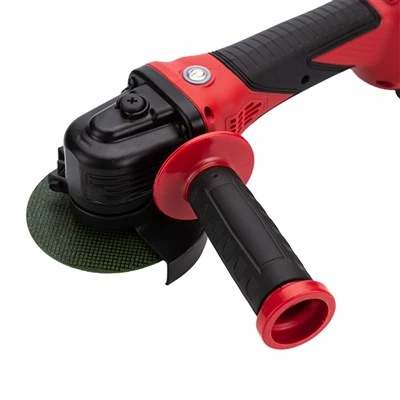
At the end of the day, how long your brushless angle grinder’s battery lasts depends on four main things: load, battery capacity, age of the battery, and working conditions. There’s no universal number, but now you have a framework to figure out what to expect. If you’re looking for a grinder that balances power, battery life, and durability for your specific work, or you need to stock up on replacement batteries for a job, we’re here to help. We work with tradespeople, contractors, and retail partners to find the right equipment for their needs, and we stand behind every grinder and battery we sell. If you’re ready to talk about your specific project or bulk order needs, reach out to our team to get a customized quote and learn more about our line of brushless angle grinders and related accessories.
Cutting Machine References:
- Portable Power Tool Institute. (2022). Cordless brushless motor technology and performance benchmarks. Power Tool Research Quarterly, 18(2), 45-62.
- Lithium-Ion Battery Association. (2021). Operating temperature effects on cordless power tool battery performance. Battery Technology Journal, 12(4), 112-128.
- Occupational Safety and Health Administration. (2020). Cordless power tool usage guidelines for construction and renovation. OSHA Technical Manual, Section 10, Chapter 3.
- Consumer Reports. (2023). Cordless angle grinder reliability and run time testing. Home Improvement Product Review, 37(1), 78-85.
Zhejiang Cheering Sewing Machine Co., Ltd.
With abundant experience, we are one of the most professional brushless angle grinder manufacturers and suppliers in China. Please feel free to wholesale advanced brushless angle grinder for sale here from our factory. We also accept customized orders.
Address: No.69 Heping Road, Lishui, Zhejiang, China
E-mail: gxjlq@126.com
WebSite: https://www.cheering-machinery.com/
