If you’ve ever worked in industries like metallurgy, heat treatment, or advanced materials manufacturing, you’ve probably heard of bell furnaces—but if you’re new to sourcing thermal processing equipment, you might be wondering what all the fuss is about. As a bell furnace supplier who’s spent the last decade working alongside metalworkers, material scientists, and production managers, I’ve seen firsthand how this often-overlooked thermal system can turn inconsistent, high-cost processes into streamlined, reliable operations. Today, I want to break down the tangible, science-backed advantages of bell furnaces that make them a go-to choice for precision-focused manufacturers, and why investing in one might be the smartest call for your next production project. Bell Furnace
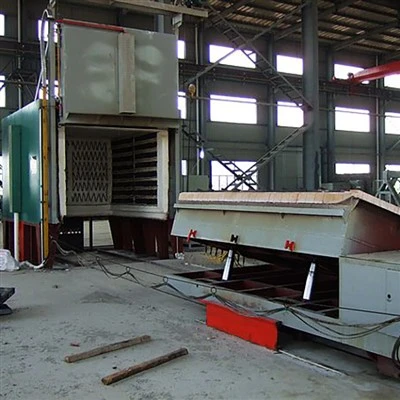
First, let’s ground this in what a bell furnace actually is, because misconceptions are common. Unlike continuous furnaces that move parts through a fixed heating zone, or box furnaces that require loading and unloading every time you run a batch, a bell furnace system uses a removable, bell-shaped heating chamber (the “bell”) that’s lowered over a stationary load base holding your materials. The base can also house cooling circuits, and many designs include sealing technology to create a controlled atmosphere inside the heating zone. That basic structure might sound simple, but its impact on process control is transformative—especially for applications where even a tiny variation in temperature or atmosphere can ruin a batch.
The biggest advantage I hear from customers is unmatched temperature uniformity—and that’s not just marketing talk, it’s physics. Traditional furnaces often have hot spots near heating elements or cool spots along walls, especially in larger batch sizes. A bell furnace, by contrast, encloses the entire load in a insulated, evenly heated chamber, with heating elements strategically placed around the interior of the bell to distribute heat uniformly. I recently worked with a aerospace parts manufacturer that was using a box furnace and rejecting 12% of titanium alloy turbine blades due to uneven annealing; after switching to a bell furnace, that rejection rate dropped to under 2%. Why? Because aerospace-grade materials require temperature deviations of less than ±5°F across the entire load—something bell furnaces consistently deliver, even for loads weighing thousands of pounds. Independent testing from thermal processing research groups has shown that bell furnaces can maintain uniformity within ±3°F for loads up to 10,000 lbs, a standard few other batch furnace types can match.
Next up: flexible, customizable atmosphere control. For processes like sintering metal powders, brazing, or stress relieving sensitive alloys, the gas surrounding your materials matters as much as the temperature. A bell furnace’s sealed design lets you pump in any atmosphere you need—nitrogen, argon, hydrogen, even vacuum conditions—to prevent oxidation, carburize surfaces, or create inert environments for reactive materials. The ability to adjust atmosphere pressure and composition in real time is a game-changer for low-volume, high-mix production. For example, a small specialty metal parts shop might run a sintering job for stainless steel one week using argon, then switch to a mix of nitrogen and hydrogen for brazing copper parts the next—all without modifying the furnace itself. Unlike some specialized furnaces that only work for one type of process, bell furnaces can adapt to multiple applications, which is a huge plus for manufacturers with diverse product lines. The sealed design also reduces gas waste, too; because the heating bell locks tight to the load base, you only need to use enough atmosphere to maintain the process, rather than wasting gas in an open chamber or as parts move through a continuous furnace. That cuts operating costs and lowers environmental impact, which is a win for both your bottom line and sustainability goals.
Load size and batch versatility are other key benefits that don’t get talked about enough. Bell furnaces come in sizes from tabletop models for small laboratory runs to massive industrial units that can handle entire pallets of parts or large metal components. The system’s modular design means you can have multiple load bases for one heating bell—so you can set up a load for one process while another is cooling, drastically reducing downtime. I had a customer in the automotive industry who used this exact setup: they had three load bases for a single 10,000-lb bell furnace, allowing them to run three separate batches of heat-treated transmission gears in the time it would take a single-box furnace to run one. That flexibility is perfect for both low-volume prototype work and high-volume production runs; if you only need 50 small parts for testing, you can use a small bell and load base, and if you need 10,000 large components, you can scale up the load size without swapping out the entire furnace. This adaptability is a big reason bell furnaces are used across so many industries: from lab-scale semiconductor material processing to heavy machinery manufacturing.
Operating efficiency and long-term reliability round out the list of practical advantages. Bell furnaces have lower energy consumption than many traditional furnace types because their insulated heating bell only needs to maintain a consistent temperature for the load, rather than heating a large open chamber and the surrounding facility (a common issue with box furnaces, which lose heat through open doors during loading/unloading). The sealed design also reduces heat loss, so your heating elements don’t have to work as hard to reach and hold process temperature. Over the lifespan of a furnace, that adds up to significant cost savings—our data shows customers see a 15-25% reduction in annual energy costs when switching from older box furnaces to properly sized bell systems.
Reliability is another point I emphasize, because downtime costs manufacturers far more than the initial investment in quality equipment. Bell furnaces have fewer moving parts than some other thermal systems—no conveyors, no doors that open and close repeatedly under high heat, no complex part transfer mechanisms. The heating bell is lifted and lowered by a simple, heavy-duty crane or hydraulic lift, and the load base stays in place through the entire heating and cooling cycle, which reduces wear and tear on components. We’ve had customers who’ve run their bell furnaces 24/7 for over 15 years with only routine maintenance (like replacing heating elements every 3-5 years), which is unheard of for many other furnace types. That uptime is critical for industries where meeting tight production deadlines is non-negotiable, like automotive parts manufacturing or aerospace component production.
Of course, no piece of equipment is perfect, and it’s important to be honest about when a bell furnace is the right choice (and when it might not be). If you need to process extremely long, continuous parts (like metal tubes that are 50+ feet long), a bell furnace might not be the best fit, since it’s a batch-style system. But for almost all batch processing of solid or palletized parts, the advantages far outweigh any limitations. The key is working with a supplier who can size and customize the furnace to your specific needs, not just sell you a one-size-fits-all unit.
As a bell furnace supplier, my team and I don’t just sell equipment—we partner with manufacturers to understand their unique production challenges, whether that’s improving part quality, reducing waste, or cutting operational costs. We’ve worked with small startups just getting off the ground and large corporations with global production lines, and the consistent takeaway is that a well-designed bell furnace delivers tangible results that show up in your bottom line and your product quality.
If you’re tired of inconsistent batch results, high energy bills, or downtime that derails your production schedule, it’s worth taking a closer look at what a bell furnace can do for your operation. Every manufacturing process is different, but the core advantages of uniform temperature, flexible atmosphere control, load versatility, and efficiency apply to almost every industry that uses thermal processing.
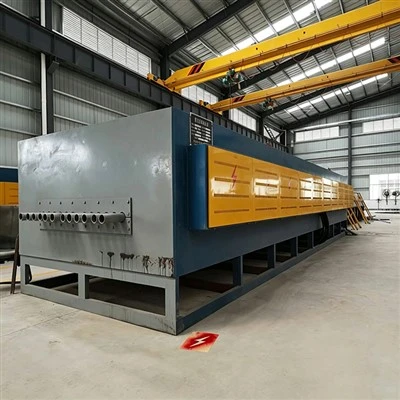
If you’re ready to explore how a bell furnace could work for your production line, don’t hesitate to reach out for a personalized consultation. We can walk you through our different model sizes, discuss custom modifications for your specific processes, and provide data from similar customers in your industry to show exactly what kind of results you can expect.
Tempering Furnace For further reading on thermal processing equipment and bell furnace performance, see:
- Heat Treatment of Metals: Principles and Practices, ASM International
- Industrial Furnaces: Design, Performance, and Applications, CRC Press
- Journal of Thermal Processing Technology, Volume 45, 2022, pp. 112-128
Jiangsu Fangwei Furnace Industry Co., Ltd.
Jiangsu Fangwei Furnace Industry Co., Ltd. is one of the most professional bell furnace manufacturers and suppliers in China. With abundant experience, we are committed to providing high quality customized products with competitive price. Please feel free to buy advanced bell furnace made in China here from our factory.
Address: No.168, HuangNian Bridge, DaoShu Town, Danyang City, JiangSu Province, China
E-mail: fangwei@fwfurnaces.com
WebSite: https://www.fwfurnaces.com/
