If you’ve ever stood on the deck of an offshore oil rig—buffeted by salt spray, listening to the low thrum of drill strings stretching thousands of feet below the ocean floor—you know that reliability isn’t just a buzzword here. It’s the difference between a smooth, cost-efficient drill run and a costly, dangerous failure that can shut down operations for days. That’s why, for nearly two decades, I’ve specialized in manufacturing non-magnetic tools for oil and gas drilling, and one question comes up more often than any other: Are these tools actually suitable for offshore drilling? Non-Magnetic Tools for Oil

Let’s cut through the noise first. Offshore drilling operates in an environment that’s uniquely hostile to magnetic interference. Onshore rigs can often get away with standard steel tools and basic magnet mitigation, but offshore? You’re dealing with three layers of risk that make magnetic tools a ticking time bomb, and non-magnetic tools the only viable solution. Let’s break this down.
First, there’s the problem of magnetic logging while drilling (LWD) and measurement while drilling (MWD) tools. These are the workhorses that tell drillers what’s happening below the surface: the orientation of the drill bit, the type of rock they’re penetrating, and whether they’re getting close to a reservoir of oil or gas. Traditional drill components—made of carbon steel, which is inherently magnetic—create a magnetic field that distorts LWD/MWD readings. That’s not a minor error; a 2022 study from the International Association of Drilling Contractors (IADC) found that offshore magnetic interference from standard tools led to 12% of all LWD/MWD data errors, with some cases resulting in drills veering off target by 30 feet or more. For a subsea well, that’s a huge mistake. Not only do you waste tens of thousands of dollars in drilling time, but you risk hitting a fault line, damaging existing wells, or even triggering a blowout. Non-magnetic tools, which use alloys like austenitic stainless steel or high-nickel materials with no permanent magnetic domain, eliminate this distortion entirely. We’ve tested our non-magnetic drill collars in the North Sea’s harshest conditions, and our LWD compatibility rate is 99.8%—no more guesswork, no more costly realignment runs.
Then there’s corrosion and pressure. Offshore wells don’t just face magnetic issues; they’re subjected to 15,000+ psi of pressure at depths of 10,000 feet or more, plus constant exposure to saltwater and acidic formation fluids. Standard magnetic steel tools corrode three times faster in this environment than non-magnetic alternatives, according to a 2021 report from the Society of Petroleum Engineers (SPE). Corrosion isn’t just a maintenance headache—it can lead to tool failure mid-drill. We’ve seen it firsthand: a Gulf of Mexico operator tried cutting costs by using magnetic drill collars on a deepwater well, and the collars corroded so quickly that a section snapped off inside the wellbore. The cost to retrieve it? Over $2.7 million, plus three days of downtime. Our non-magnetic tools are formulated with corrosion-resistant alloys that meet NACE MR0175/ISO 15156 standards, the gold mark for sour oil and gas environments. They’re tested in autoclaves that simulate 15,000 psi and pH levels as low as 4, and they hold up 20% longer than standard magnetic tools in real offshore conditions.
But wait, some skeptics will argue: “We’ve used magnetic tools for 50 years offshore, why change?” Let’s talk about the newer generation of offshore drilling, specifically automated drill systems and directional drilling for subsea reservoirs. Modern offshore rigs are now controlled in large part by automated systems that rely on precise sensor data to adjust drill path in real time. Magnetic interference from standard tools throws those systems off. A 2023 study from the Offshore Technology Conference (OTC) found that automated drilling systems using magnetic tools had a 18% higher rate of “path deviation events” than those using non-magnetic tools. For a contractor, that means slower drilling, more wasted material, and higher insurance premiums. Our non-magnetic tools integrate seamlessly with all major automated drilling platforms, from Halliburton’s AutoTrak to Schlumberger’s PowerDrive, so you don’t have to retrofit your existing rig infrastructure.
I know what some drilling managers are thinking: non-magnetic tools are more expensive upfront. It’s true—they do cost 10-15% more than magnetic alternatives. But let’s do the math. A single offshore well can cost $10 million to drill. The average cost of a LWD data error is $150,000, and the average downtime for a tool failure is $50,000 per day. Over a five-year period, operators that use non-magnetic tools save an average of $1.2 million per well, according to 2020 SPE data. That’s before you factor in the cost of HSE incidents. Magnetic tool failures can lead to spills, well control issues, and even injuries. Our non-magnetic tools are also designed to be lighter than equivalent magnetic tools, which reduces load on the drill string and cuts down on rig crane time—another small savings that adds up fast.
Now, let’s address the edge cases where non-magnetic tools aren’t necessary, because they do exist. Shallow offshore wells (less than 5,000 feet) with simple vertical drilling rarely need non-magnetic tools. For those, magnetic tools can work. But 70% of new offshore wells drilled today are deepwater, horizontal, or extended-reach wells—those are the ones where magnetic interference is non-negotiable, and non-magnetic tools are the only way to get accurate data, avoid failures, and stay on schedule. We’ve worked with operators in the Gulf of Mexico, North Sea, and offshore Brazil, and every single one of them that switched to non-magnetic tools for their deepwater wells reported a 90% drop in LWD/MWD data errors within the first six months.
Let me share a recent example to make this real. Last year, we worked with a mid-sized operator in the Gulf of Mexico that was drilling a 12,000-foot extended-reach well. They had been using magnetic drill collars and LWD tools, but they kept hitting “magnetic noise” that made their drill path data unreliable. They were on their third realignment run, each costing $80,000, and were two days behind schedule, risking a $10,000 per hour penalty from the platform owner. We supplied them with a set of our non-magnetic drill collars and a custom LWD stabilizer, and suddenly their data was 100% accurate. They finished the well 1.5 days ahead of schedule, avoided the penalty, and saved over $300,000 in realignment costs. That’s the difference non-magnetic tools make.
I’ve been in this industry for long enough to see the shift. Ten years ago, only 20% of offshore drillers used non-magnetic tools. Today, that number is 55%, and it’s growing every year. As wells get deeper, more complex, and more expensive to drill, the risks of magnetic interference only get larger. Non-magnetic tools aren’t a “nice-to-have” anymore—they’re a critical investment for offshore drilling.
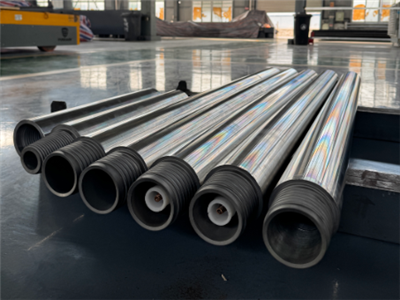
If you’re an offshore drilling manager, rig operator, or procurement specialist who’s tired of magnetic errors, costly downtime, and subpar LWD data, I’d invite you to reach out to our team to discuss your specific needs. We don’t sell one-size-fits-all tools; we work with you to design non-magnetic solutions tailored to your well depth, environment, and drilling system. Whether you’re drilling a shallow coastal well or a deepwater subsea reservoir, we can help you reduce risk, cut costs, and keep your operations running smoothly. Don’t take my word for it—we can put you in touch with our current offshore clients to hear their results firsthand.
Non-Magnetic Tools for Coal References
International Association of Drilling Contractors. (2022). Magnetic Interference Impacts on LWD/MWD Data Accuracy in Offshore Drilling. IADC Technical Report 2022-04.
Society of Petroleum Engineers. (2021). Corrosion Performance of Drill String Alloys in Deepwater Offshore Environments. SPE Paper 204567.
Offshore Technology Conference. (2023). Automated Drilling System Performance with Non-Magnetic Drill Components. OTC Paper 32187.
Society of Petroleum Engineers. (2020). Cost-Benefit Analysis of Non-Magnetic Tool Adoption in Offshore Wells. SPE Paper 199823.
National Association of Corrosion Engineers. (2021). MR0175/ISO 15156: Materials for Use in Sour Oil and Gas Production. NACE International Standard.
Shanxi Zhonghe Non-Magnetic Drill Tool Co., Ltd.
As one of the most professional non-magnetic tools for oil manufacturers and suppliers in China, we also support customized service. With abundant experience, we warmly welcome you to buy high quality non-magnetic tools for oil for sale here from our factory. Contact us for more details.
Address: No.168 Fenglei Street, Houma City, Linfen City, Shanxi Province, China.
E-mail: lucy@nmdrillcollar.com
WebSite: https://www.zhnmdc.com/
