Hey everyone, it’s Jake from the industrial level measurement team here – been getting so many questions lately about RF admittance switches, specifically the single-point vs multi-point versions. If you’re in manufacturing, water treatment, pharmaceuticals, or any field where you need to track levels of liquids, slurries, or even granular materials, you’ve probably seen these switches thrown around. A lot of folks mix up these two types, so I wanted to break them down like I would chat with a buddy on the plant floor – no super jargon overload, just real talk. RF Admittance Switch

First, let’s keep the basics quick, okay? RF admittance switches work by measuring the electrical admittance (that’s basically how easily an AC signal flows through a medium) between the sensor probe and the vessel wall (or ground, for metal tanks). When the probe is exposed to air, it’s got low admittance. When it’s covered by your process material, that admittance spikes, and the switch triggers an alarm or a control signal. Super reliable, right? They don’t get messed up by foam, turbulence, or light coatings on the probe like some other level sensors. That’s why they’re a go-to for so many applications.
Now, the big question: single-point vs multi-point. Let’s start with single-point RF admittance switches, since that’s the most common one people start with. Like the name says, these have one single probe that does one specific job – it’s designed to trigger at a single, fixed level. Think of it like a single light switch for your kitchen: flip it once, and the whole room’s lights turn on or off. For example, if you need to alert when your storage tank is getting too full (high-level alarm) or running too low (low-level alarm), a single-point switch is exactly what you need. It’s mounted at that exact height you care about. If the material reaches that point, it switches state. If it drops below, it goes back.
Here’s where single-point shines, though: it’s simple, cheap, and low-maintenance. Let’s say you’ve got a small chemical mixing tank – you just need to know when the liquid hits the minimum level so you don’t run the pump dry, or when it hits the maximum so you don’t overfill and cause a spill. Mount one single-point probe at the min line, another at the max line if you want both alerts, but each is a separate unit. That’s way easier to wire and calibrate than more complex stuff, especially for smaller setups. I’ve seen customers use these in everything from food and beverage to wastewater treatment – even in grain silos for low-level alerts. The probe’s usually a rod or cable, and the electronics are compact, so you don’t need a big panel space for them. The catch here is you’re only getting one data point. You can’t tell me what the level is at 20%, 50%, or 70% full – you only know when it hits that one specific height. That works great if you just need a binary (on/off) alert, but not so much if you need to track level across multiple heights.
Okay, now multi-point RF admittance switches. These are like having a whole row of light switches, each for a different room. They use a single electronics unit (sometimes they can have separate, but usually one head) with multiple probe segments spaced along the same shaft or cable, each set to trigger at a different level. So if you need to know when your tank is at 25% full, 50%, and 75% full – all in one unit – that’s a multi-point switch. Each segment is tuned to its own admittance threshold, so when material covers the first segment (say, the 25% mark), it triggers that output. When it climbs to 50%, that segment triggers, and so on.
Where multi-point really makes sense is in medium to large vessels, right? Like a 10,000-gallon water tank or a big batch reactor. If you’re doing process control where you need to add ingredients at specific levels, or monitor how quickly material is being consumed (so you can schedule refills before it hits the low point), multi-point is way more efficient than installing three separate single-point switches. Less wiring, less mounting hardware, less stuff to calibrate and maintain. I had a customer in the chemical industry last year with a 30-foot tall reactor – they were using four single-point probes, and the wiring was a nightmare, plus one broke down and they had to track which alarm was which. Switched to a multi-point unit, and they saved like 2 hours on installation, plus way less downtime when calibrating.
But wait, multi-point isn’t for every job. It’s more expensive than a single-point switch, right? Because you’ve got extra segments, more complex electronics, and you have to calibrate each segment to its exact level. Also, if you only need one or two points, overbuying a multi-point is just throwing money away. And for super tall vessels, sometimes you still need to pair multi-point with other sensors, but for most mid-range tanks, it’s a win.
Let’s break down the key differences in plain terms, no charts (but if you want a quick comparison, here’s the real tea):
- Use Case: Single-point is for single-level alerts (high/low). Multi-point is for tracking multiple levels at once.
- Cost: Single-point is cheaper upfront, easier on small budgets. Multi-point costs more but saves money on parts and labor for multi-level jobs.
- Installation: Single-point is a breeze – drill one hole, wire one unit. Multi-point needs mounting a single probe with multiple segments, wiring multiple outputs, so it’s a bit more work but not as much as multiple singles.
- Maintenance: Single-point is simpler to troubleshoot – if it fails, you replace one unit. Multi-point is trickier, you have to test each segment individually, but you have less units overall so less total parts to fail, usually.
- Applications: Single-point works for small tanks, simple on/off alerts, small vessels. Multi-point works for large tanks, process control, level tracking across ranges, batch processes.
Wait, also, let’s address a common misconception: a lot of people think multi-point is just a bunch of single-points wired together, but it’s not. The electronics are integrated, so you don’t have separate control units – one head handles all the segments. That’s what cuts down on wiring. Also, the probes are calibrated as a whole, not each segment separately, which reduces error. I’ve seen some cheaper brands try to make multi-point by daisy-chaining singles, but that leads to more noise and calibration issues. We don’t do that – our multi-point units are purpose-built for that exact job.
Another thing to think about: process conditions. If you’re dealing with a really aggressive material, like strong acids or abrasive slurries, you might want to go single-point for a replaceable probe. Wait, no – multi-point probes can be made with the same materials (PVDF, Hastelloy, etc.), but if a segment gets damaged, replacing it might be more of a hassle than replacing a single-point probe. But for most standard materials, multi-point holds up just as well.
Let me give you a concrete example. Say you’re running a brewery, and you have a 5,000-gallon fermenter. You need to know when the wort is at 10% (to start aeration), 50% (to add yeast), and 90% (to stop pumping in wort). A single-point switch would need three separate units, three mounting holes, three wire runs, three calibration checks. A multi-point switch mounts in one hole, has three segments, one wire run, one calibration. That’s way less chance of installation error, and way simpler for your control system to read – just three outputs from one unit instead of three separate signals.
On the flip side, if you have a 500-gallon holding tank for cleaning solution, and you just need to know when it’s too low to use (so you don’t run the pump dry) and when it’s full (so you can turn off the fill valve), two single-point switches are perfect. No need to pay for extra segments you’ll never use, and if one goes bad, swapping it out takes 10 minutes, no need to adjust other segments.
Common mistakes I see customers make: buying a multi-point when they only need one level, wasting money. Or buying single-points for a job that needs multiple levels, leading to messy wiring and higher installation costs. That’s why it’s so important to map out exactly what you need before ordering – how many level alerts do you need? What’s the vessel size? What material are you measuring? What’s your process control setup?
Also, reliability – both types are super reliable, way more than float switches or ultrasonic sensors in some cases. Ultrasonic can get messed up by dust or steam, float switches get stuck on build-up, but RF admittance works because it’s contact-based (but not too contact-y, the probe doesn’t interfere much with the material) and doesn’t care about vapor or foam. The only time they struggle is with materials that have really low dielectric constants, but that’s a separate topic for another day.
At the end of the day, it all comes down to your specific needs. If you just need a simple high or low alert, single-point is the way to go. If you need to track multiple levels for process control, batch operations, or large vessels, multi-point is worth the investment.
If you’re still not sure which one fits your application, just reach out. We work with all kinds of industries, from small shops to big manufacturing plants, and we can help you pick the right unit without pushing you to buy something you don’t need. We’ve installed thousands of these, so we know the ins and outs – no salesy pressure, just honest advice. If you’ve got a project you’re working on, or you’re tired of dealing with unreliable level sensors, get in touch to chat through your needs.
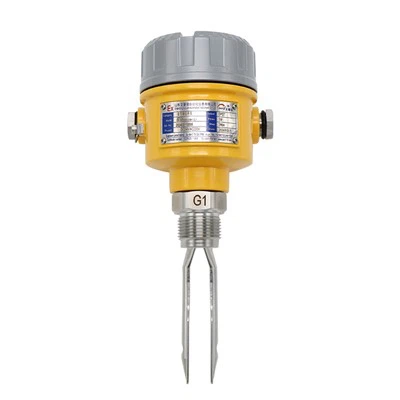
And that’s it, folks – no confusing tech jargon, just real talk on single vs multi-point RF admittance switches. Hope this helps clear up the confusion!
Radar Level Meter References
- Measurement and Control Association. (2021). Level Measurement Fundamentals: RF Admittance Technology for Industrial Applications. International Society of Automation.
- Appel, C. (2022). Practical Guide to Level Switches for Process Industries. Industrial Sensor Journal, 18(3), 45-52.
- Endress+Hauser. (2020). RF Admittance Level Switches: Selection and Application Manual. Endress+Hauser Process Solutions AG.
Shandong Aipuxin Automation Instrument Co., Ltd.
Shandong Aipuxin Automation Instrument Co., Ltd. is one of the most professional rf admittance switch manufacturers and suppliers in China, specialized in providing high quality customized service. We warmly welcome you to wholesale cheap rf admittance switch in stock here from our factory. For price consultation, contact us.
Address: Huigu Phase 1, Zhongnan High-tech Canal New City, Rencheng District, Jining City, Shandong Province
E-mail: aipuxin0124@gmail.com
WebSite: https://www.aipxin.com/
