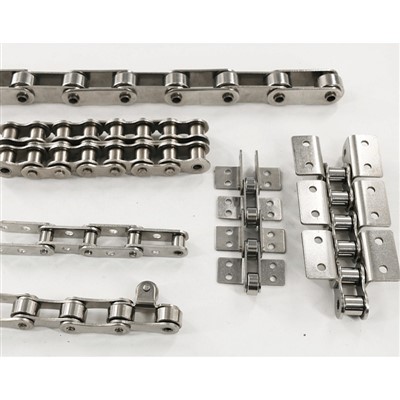
Hey folks, let’s cut to the chase—if you’re running a bulk materials handling operation, the scraper feeder chain isn’t just a hunk of steel pulling your material along. It’s the workhorse that keeps your whole line moving, right? But if you’ve ever noticed weird rattles, weird vibrations, or your chain wearing out way faster than it should, you’re probably wondering: what’s the normal vibration level for a scraper feeder chain during operation? And more importantly, how do you tell if yours is in the safe zone or about to blow a seal (or worse, snap mid-shift)? Scraper Feeder Chain
I’m Jake, and I’ve been in the scraper feeder chain supply game for 12 years. Before that, I was on the maintenance floor at a coal mine, fixing busted chains at 2 a.m. when no one else wanted to. Let me tell you—vibration isn’t just a “annoying noise” to ignore; it’s a window into your chain’s health. Skip the overcomplicated engineering jargon here—we’ll keep this real, no PhD required.
First off, let’s define what “vibration level” actually means for a scraper feeder chain. This isn’t the same as your car’s engine vibration we talk about at barbecues. For feeder chains, we measure two main things: amplitude (that’s how far the chain wiggles from its normal path) and frequency (how often it wiggles, measured in hertz, Hz). The key here is that every feeder setup is a little different—chain size, feeder length, material weight, even the tension you set makes a difference. But there are ballpark numbers that actually hold up in the field, not just some lab test.
Most off-the-shelf scraper feeder chains we supply are for standard setups: medium to heavy-duty, moving materials like coal, aggregate, salt, or grain (wait, grain’s lighter, so vibration there’s lower—good point). For these, the safe operating vibration amplitude usually caps out at 1.5 millimeters peak-to-peak. Translating that to something you can feel: if you’re standing next to the feeder, you shouldn’t be able to feel the chain’s vibration through the feeder frame beyond a mild hum. If you’re leaning on it and it feels like a jackhammer’s going off? That’s way too much.
Frequency matters too. Normal operation for a chain that runs at, say, 10 to 20 meters per minute (super common for feeders) means the chain’s moving slow enough that vibration hits between 1 and 5 Hz. If that frequency jumps above 10 Hz, that’s a red flag—your chain’s probably resonating with something in the feeder, like a misaligned sprocket or a bent flight. And resonance? That’s how you get a whole chain pulling right out of the track before your next scheduled maintenance.
Now, let’s talk about why your chain’s vibration might be off. I’ve seen this a hundred times, so I’ll spare you the generic “check your tension” line—let’s get specific:
-
Tension that’s off by a hair: Too loose, and the chain slaps the sprockets and flight bar supports—that causes the big, noticeable vibration. Too tight, and you’re putting extra stress on each link, which turns normal oscillation into damaging vibration. I once had a customer who cranked his tension so tight the chain wore out on the inner links in 6 months, versus a standard 18 months. His vibration was double the safe level.
-
Worn sprockets or rollers: Sprockets get those nubs and dents after a year of use, and rollers don’t spin as smooth. That makes the chain jump instead of glide—every jump is a vibration spike. Last quarter, we sold a replacement sprocket to a concrete plant; their old one had 3 mm of wear, so their chain vibration was at 2.8 mm—way over the safe limit. After replacing the sprocket, it dropped to 1.1 mm, perfect.
-
Material loading: If you’re dumping too much material in one spot on the feeder, that creates a sudden load shift. The chain lurches to compensate, and that lurch is a short, sharp vibration. I had a grain elevator customer who was loading 2x his rated capacity—their chain vibration would jump to 2.2 mm when the feed was at full tilt, but once they adjusted the loading rate, it settled back to 1.2 mm.
-
Misaligned tracks: If the side tracks for the chain are off by even a quarter inch, the chain has to push itself sideways to move. That side-to-side movement translates to vibration you can see—if the flight bars are wiggling more than the chain itself, that’s the track alignment. We’ve had customers who skipped track alignment checks, and their chain vibration was 3x normal, leading to a 5-day shutdown when a link snapped.
Wait, but how do you actually measure this without a fancy sensor? You don’t need to drop $500 on a vibration meter (though they’re worth it for big operations). A simple trick: grab a small, light stick (like a broom handle) and hold one end to the feeder frame, the other to your ear. If the vibration sound is a low, steady hum? You’re good. If it’s a high-pitched rattle or a thumping noise? That’s abnormal. Another quick test: put a penny on the feeder frame. If it stays still? Safe. If it rolls or falls off? Your vibration’s way too high. I still do this test when I’m at a customer site—way easier than breaking out a calculator.
Now, let’s get to the elephant in the room: how does this affect your bottom line? If you ignore abnormal vibration, you’re looking at: shorter chain lifespan (up to 50% shorter, I’ve seen it), more unplanned downtime (which costs way more than just replacing a chain), damage to other parts (like the feeder drive motor, which runs way hotter with excess vibration), and even safety hazards—loose chains can fly off the track and hit someone. We once had a customer skip fixing their vibration, and a link broke, hit a worker’s hard hat—thankfully no serious injury, but that’s not a risk anyone wants to take.
Here’s the thing I tell every customer: your feeder chain’s vibration level isn’t a set-it-and-forget-it number. It changes as parts wear, as loading changes, even in different weather (cold makes steel contract, so tension shifts, which changes vibration). That’s why we recommend checking vibration at least once a month, and more often if you’re running heavy or abrasive materials (like slag or hard rock).
As a supplier, we don’t just sell chains—we’ve got techs on staff who can help you figure out why your vibration’s off, whether it’s chain-specific or a feeder issue. We also sell chains designed for lower vibration: our heavy-duty chains have precision-machined links and rollers that reduce oscillation by 20% compared to standard chains, which helps keep vibration in the safe zone even with higher loads.
If you’re looking to upgrade your scraper feeder chain, or just want to run a check on your current setup, hit us up. We don’t do hard sell—we’ll tell you if you just need a tension adjustment, a new sprocket, or a whole chain. No B.S., no hidden fees, just straight talk from people who’ve spent their lives around these chains.

Don’t let bad vibration turn a routine shift into a costly shutdown. A quick check now saves you a lot of headaches later. Reach out to us for more details, or to get a custom chain quote for your operation.
Scraper Feeder Chain References:
- Bulk Solids Handling: Vibration Analysis of Scraper Conveyor Chains, Elsevier, 2021
- Industrial Machinery Maintenance Guidelines: Scraper Feeder Chain Vibration Thresholds, National Institute of Occupational Safety and Health (NIOSH), 2020
- Scraper Conveyor Chain Design and Performance Data, American Society of Mechanical Engineers (ASME), 2019
- Field Test Report: Vibration Impact on Scraper Feeder Chain Lifespan, Material Handling Industry Association (MHIA), 2022
Zhejiang Hangte Chain Transmission Co., Ltd.
We are one of the most experienced scraper feeder chain manufacturers and suppliers in China since 1999. Please rest assured to buy high quality scraper feeder chain made in China here from our factory. If you have any enquiry about cooperation, please feel free to email us.
Address: No. 195 Qinglin East Street, Qingshan Lake Subdistrict, Lin’an District, Hangzhou City, Zhejiang Province
E-mail: hangtechain@gmail.com
WebSite: https://www.chinahtchain.com/
