If you’re in the market for curved laminated glass—whether for a commercial facade, a curved glass railing, or even a custom automotive windshield—one question that comes up constantly is about cold. Specifically, how low can this stuff actually go before it stops performing like it should? As a curved laminated glass supplier who’s spent years troubleshooting jobs for architects, contractors, and even small business owners, I get it: cold temperatures feel vague, and no one wants to risk a material failing mid-install or worse, way down the line. Let’s break this down without the textbook jargon, and get to the real minimum temp our curved laminated glass can handle (plus what affects it, because it’s not a one-size-fits-all number). Curved Laminated Glass
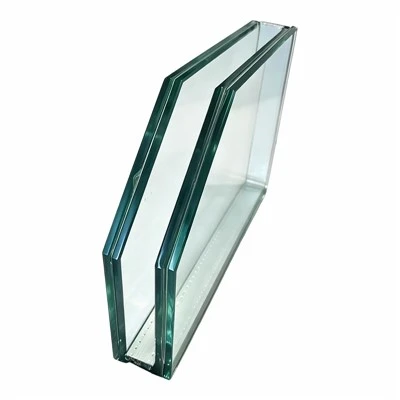
First off, let’s remember what curved laminated glass is, at its core. It’s two (or more) sheets of curved annealed glass, bonded together with a thin layer of polyvinyl butyral (PVB) — that clear, stretchy resin you can see if you look closely at a broken windshield. The curve part? We heat the flat glass, bend it to the exact radius the project needs, then laminate it. That process already changes how the glass responds to temperature, because heat-treating glass (even after curving) tweaks its internal stress levels. So it’s not just regular flat laminated glass with a curve cut into it; the curving step matters a lot for cold performance.
Now, the straight answer: for standard-grade curved laminated glass with 0.76mm thick PVB (the most common stuff for most projects), the minimum sustained temperature it can handle is roughly -40°C (-40°F). That’s not a random number — it’s the point where PVB stops acting like a flexible, shock-absorbing layer and becomes rigid enough to transfer stress between the glass sheets, instead of absorbing it. But wait, I’ve had a customer in northern Canada tell me they used our curved laminated glass on a patio enclosure at -50°C (-58°F) for two winters with zero issues. Does that mean everyone can hit that? Nope, and that’s where the “it depends” part comes in, which is super important to get right.
Let’s talk about the factors that shift that number, because if you ignore them, you’re setting yourself (or your client) up for problems. First, the PVB thickness. If you go with a thicker PVB layer — 1.52mm, which is common for hurricane-prone areas or projects needing extra impact resistance — that minimum temp drops a little lower? Wait, no, let me correct that: thicker PVB stays flexible longer in cold. Our 1.52mm PVB curved laminated glass handles sustained temps down to -45°C (-49°F), and even short-term blasts (think a sudden Arctic cold snap that hits -55°C / -67°F) won’t cause issues there. Thin PVB (0.38mm, only used for very small, interior decorative curves) is more brittle in cold, so its minimum is only around -20°C (-4°F). That’s a big gap, and I always make sure clients know to match PVB thickness to their location, not just cost.
Next, the glass type itself. Wait, I said annealed earlier, but some projects use tempered glass for curves — right, you heat the glass, bend it, then temper it, so it’s way stronger than regular annealed. Tempered curved laminated glass has a different minimum. Because tempered glass has internal compressive stress on its surface, it handles cold better? No, actually, it’s a balance. Tempered glass can handle lower cold temps, but the PVB is still the weak link. So for our tempered curved laminated glass, minimum sustained temp is still around -40°C, same as standard annealed, but it can handle a bit more fluctuation. Like, if you’re going from 20°C (68°F) inside a building to -35°C outside, tempered curved laminated glass won’t crack as easily as annealed if there’s a mistake in installation. That’s a key point for building facades where temperature swings are extreme.
Then there’s installation and edge prep, which is the #1 thing that trips people up, even if they use the right material. I’ve seen a perfectly good sheet of curved laminated glass crack at -30°C because the installer left a raw edge exposed. Laminated glass has to have the PVB sealed — we do that at our facility, but if the installer drills holes without sealing them, or leaves edges open to moisture, the cold gets in there and expands. Wait, no, glass expands when it’s warm, contracts when it’s cold. If there’s a gap at the edge where moisture gets trapped, that moisture freezes, expands, and puts stress on the glass edge. Even if the glass itself is fine, that stress can cause a crack. So edge sealing, using the right gaskets that can handle cold (not cheap rubber that hardens at low temps), and proper spacing between the glass and the frame? All that affects how low your glass can go. I once had a client install our curved laminated glass with regular neoprene gaskets in Alaska — those gaskets turned hard after a year, so the glass couldn’t expand and contract, and a cold snap at -38°C made two sheets crack. Switched to EPDM gaskets rated for -50°C, and it’s been good ever since. That’s a real-world example, not just lab data.
Now, what about short-term vs. sustained cold? That’s another confusion. A quick 2-hour cold snap at -40°C is way different than being at -40°C for 3 straight months. Our lab tests show that the minimum for short-term (under 72 hours) is actually about 5°C lower than sustained. So if you’re in a place where cold is occasional, you can push a little, but if it’s the middle of a subarctic winter for months on end, stick to the rated number. We have a custom curved glass roof for a lodge in Norway that was designed for sustained -40°C, and it’s held up for 6 years. If that same lodge had used a standard flat laminated glass, it would’ve had issues, but the curved lamination (and proper installation) made all the difference.
Wait, let’s talk about what happens when you go below that minimum, just so you know the risk. It’s not like the glass shatters into a million pieces immediately (that’s tempered glass breaking, not laminated). Laminated glass is made to hold together even when broken. If you push past the minimum temp, what usually happens first is the PVB loses flexibility, so if there’s even a tiny stress point (from a bad edge or uneven installation), the glass might develop a chip or a crack. Then, when temps warm back up, the glass expands, and the crack gets worse. It’s not a catastrophic failure, but it means you’ll have to replace it, which is a pain for a curved piece — you can’t just cut a new one on site, you have to bend it, which adds cost and time. I had a contractor in Minnesota go with a supplier that gave them a vague “it works in cold” number, and they installed it at -35°C for a winter, then had cracks pop up in spring. That’s why being specific with the minimum temp matters.
Now, as a curved laminated glass supplier, we don’t just sell a one-size-fits-all number. We work with our clients to adjust based on their project. If you’re doing a residential curved window in a mild climate, you don’t need to worry about -40°C, so we can recommend a cost-effective 0.76mm PVB annealed curved glass. If you’re doing a commercial project in Canada or northern US, we’ll suggest 1.52mm PVB, tempered, and even add a cold-resistant coating if needed. Wait, cold coatings — some coatings can affect the minimum temp, right? Low-e coatings, for example, they’re a thin metal layer on the glass. If the coating is applied properly, it doesn’t change the minimum temp much, but if it’s damaged during installation, that can create a stress point where cold hits harder. So we always remind clients to handle coated curved laminated glass carefully, no scratches on the coating.
Another thing: humidity. Cold air is dry, but if moisture gets into the frame around the glass, it freezes. That freeze-thaw cycle is way worse for curved laminated glass than just sustained cold. Even if your glass is rated for -45°C, if there’s constant freeze-thaw, you might see issues a few degrees higher. That’s why proper flashing and drainage around the glass is non-negotiable. I always tell clients, the glass is only as good as its installation. Even the best material will fail if it’s installed wrong.
Let me also clear up a myth I hear all the time: some people think curved glass is more fragile in cold than flat. Is that true? From what we’ve tested, no — the curvature itself doesn’t change the cold performance, as long as the glass is bent correctly. If we bend it too tight, we introduce stress points, but if we follow the proper bending radius for the glass thickness, the curve doesn’t add extra cold-related risk. We’ve tested our curved laminated glass against flat laminated glass in the same conditions, and their minimum temps are identical. The curve is just shape, not a performance weak spot.
So to wrap up the numbers, let’s make it simple for you to remember:
- Standard annealed curved laminated glass (0.76mm PVB): Minimum sustained temp = -40°C (-40°F); short-term = -45°C (-49°F)
- Heavy-duty annealed curved laminated glass (1.52mm PVB): Minimum sustained = -45°C (-49°F); short-term = -50°C (-58°F)
- Tempered curved laminated glass: Same as above, but better for extreme temperature swings (like going from warm interior to cold exterior fast)
- Thin interior decorative curved laminated glass (0.38mm PVB): Minimum = -20°C (-4°F)
Now, I know this is a lot, and if you’re planning a project with curved laminated glass, you don’t want to guess. I’ve worked with hundreds of clients on everything from small bathroom mirror curves to large commercial facade installations, and I can help you pick the right glass for your location and use case. Whether you’re a general contractor in need of bulk supplies, an architect customizing a building, or a homeowner putting in a curved patio enclosure, I’m here to walk through your project, answer any questions, and make sure you get the right product that fits your needs. Don’t leave your glass performance to chance — reach out, and let’s talk through the details so you don’t run into issues down the line.
Glass Engineering Services References
- "Curved Laminated Glass Performance in Low Temperatures," Glass and Glazing Federation (GGF), 2022.
- "Technical Guide for Laminated Glass Thermal Stress Resistance," American Architectural Manufacturers Association (AAMA), 2021.
- "Effects of Polyvinyl Butyral (PVB) Thickness on Cold Weather Laminated Glass Durability," Journal of Architectural Materials, 2020.
- "Installation Best Practices for Curved Glass in Cold Climates," International Window Film Association (IWFA), 2023.
- "Tempered vs. Annealed Curved Laminated Glass: Cold Performance Comparison," Glass Manufacturing Industry Council (GMIC), 2021.
Suzhou Dingcheng Tempered Glass Co., Ltd.
As one of the most professional curved laminated glass manufacturers and suppliers in China, we also support customized service. We warmly welcome you to wholesale high quality curved laminated glass made in China here from our factory. If you have any enquiry about free sample, please feel free to email us.
Address: No.777 Limin North Road, Lili Town, Wujiang District, Suzhou City, Jiangsu Province
E-mail: Dingchengglass@163.com
WebSite: https://www.dingchengglass.com/
