As a metal bellows supplier with over 15 years in the industry, I’ve seen firsthand how even a tiny compliance misstep can turn a reliable component into a critical risk for clients. Whether we’re working with aerospace manufacturers, chemical processing plants, or medical device producers, the question I hear most often isn’t just “Do your bellows meet standards?”—it’s “How can I be sure they stay compliant, every single time?” For years, I’ve refined a set of practices that don’t just check boxes for regulatory bodies, but build trust with partners who depend on metal bellows to hold up under extreme pressure, temperature, and corrosive environments. Let me break down what that process looks like, straight from our shop floor and our quality team. Metal Bellows
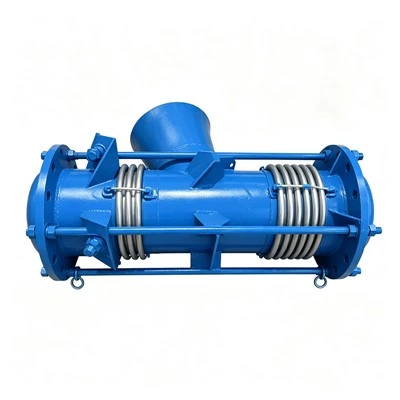
First, let’s ground this in what compliance actually means for metal bellows. Standards aren’t arbitrary guidelines—they’re developed through decades of industry testing, failure analysis, and real-world application to prevent leaks, structural failure, and safety hazards. The most widely referenced global standards for metal bellows include ASME BPVC Section VIII (for pressure vessel applications), ISO 13723 (metal bellows for piping systems), and EJMA Standards (Expansion Joint Manufacturers Association, the gold standard for expansion joint and bellows design). But here’s the thing: compliance starts long before a bellows leaves our facility. It starts with material selection, which is where many suppliers cut corners to save costs, and where we’ve built our most rigorous checks.
Last year, we had a client come to us after a batch of bellows from another supplier failed a pressure test mid-installation. The issue? The supplier had substituted 316L stainless steel—required per the client’s spec—with 304 stainless, which has lower corrosion resistance. For a food and beverage processing plant, that meant potential contamination; for a pharmaceutical manufacturer, it could have shut down a production line for weeks. Our process eliminates that risk because every batch of raw material undergoes three independent verifications. First, our incoming materials team checks material test reports (MTRs) from the mill, confirming the alloy composition, tensile strength, and corrosion resistance match the ordered grade. Then, our in-house metallurgist runs a quick positive material identification (PMI) scan on a random sample of each coil or tube to cross-reference the MTR. Finally, we hold a 24-hour salt spray test on a test coupon from every material batch to confirm it meets the minimum pitting resistance equivalent number (PREN) required for the application. For example, 316L stainless steel requires a PREN of at least 18; we reject any batch that comes in below that, even if the mill’s report says it meets specs. That extra step costs us a small amount of time per batch, but it’s saved our clients from millions in downtime and liability—costs that would far outweigh any minor savings on material.
Next, design and fabrication processes must align with industry standards, and this is where subjective interpretation can lead to compliance gaps. For example, EJMA’s standards outline allowable fatigue cycles for metal bellows, but a supplier could cut corners by using a thinner wall or a smaller corrugation pitch to reduce material and labor costs. That might make the bellows cheaper upfront, but it would fail well below the required cycle count for a client’s application. Our design team works directly with clients to map their specific operating conditions—temperature range, pressure fluctuations, movement amplitude, and media type—then runs finite element analysis (FEA) simulations to ensure the design meets or exceeds EJMA’s fatigue and stress limits. We don’t just use off-the-shelf FEA models; we adjust each simulation to account for the unique characteristics of our manufacturing process. For example, our hydroforming process creates a residual stress in the bellows walls that we factor into the simulation, which many generic models ignore. That means the design isn’t just compliant on paper—it’s tested to perform in the actual conditions our client will use it in.
During fabrication, in-process checks are non-negotiable. A bellows can look perfect on the outside, but a tiny crack in the corrugation root, created during the welding or forming process, can lead to a catastrophic failure later. We use a combination of automated and manual checks at every stage. For welded bellows (a common type for high-pressure applications), each weld is 100% inspected with ultrasonic testing (UT) to detect internal defects, and then a dye penetrant test to catch surface cracks. For hydroformed bellows, every corrugation is measured with a coordinate measuring machine (CMM) to ensure the pitch, height, and wall thickness match the design specs. We also conduct a “proof test” on every finished bellows: we pressurize it to 1.5 times the maximum operating pressure for 10 minutes, then inspect for leakage or permanent deformation. This isn’t just a box-ticking exercise—last quarter, we found a batch of 12 bellows with a minor deformation during proof testing that had been missed by a less rigorous supplier; had we shipped those, they would have failed after just a few thousand cycles. That’s the kind of detail that sets compliant suppliers apart from those that take shortcuts.
Documentation is another critical part of compliance, especially for industries like aerospace and medical devices that require full traceability. Many suppliers give clients a generic MTR that doesn’t tie the test results to the specific serial number of the bellows they receive. Our documentation process creates a full audit trail for every single bellows: each has a unique serial number, and we track every raw material batch, every fabrication step, every inspection result, and every test run for that unit. When a client receives a shipment, they get a customized certificate of compliance (CoC) that not only confirms the bellows meets the relevant standards, but also includes the exact test data for that specific unit. For example, if a client needs a bellows for a ASME Section VIII pressure vessel, their CoC will include the proof test pressure, the fatigue cycle test results, and the material composition data—all linked to the serial number. This level of documentation isn’t required for every application, but it’s become a standard request from clients who need to maintain their own compliance with regulatory bodies. I’ve had aerospace clients tell us that our traceability process was the deciding factor in choosing us over another supplier, even when our price was 10% higher.
Third-party audits and certifications are also essential to ensure we’re not just following our own processes. We undergo annual audits by third-party organizations like the National Board of Boiler and Pressure Vessel Inspectors (NBBI) for ASME certification, and EJMA for compliance with their design and manufacturing standards. These audits don’t just check our paperwork—they walk through our shop floor, review sample bellows, and repeat our inspection and test processes to confirm we’re actually doing what we say we do. Last year, during an NBBI audit, the inspector noticed we were using a different type of ultrasonic test equipment than what was listed in our procedures. We corrected that immediately, but it highlighted how important it is to stay up-to-date with audit requirements and not become complacent in our processes. We also work with clients to conduct on-site inspections if they need to verify compliance themselves; many of our long-term partners send their quality teams to our facility quarterly to review our processes, and that level of transparency has built a loyalty that’s hard to find.
One common mistake I see clients make is assuming that “compliance” means meeting just one standard, when their application might require multiple. For example, a chemical processing plant’s bellows might need to meet ISO 13723 for piping systems, ASME B31.3 for process piping, and also have corrosion resistance to match the specific chemical they’re handling. Our team works with clients to map all the relevant standards for their application, not just the one they initially reference. Last year, a client in the semiconductor industry came to us with a bellows design that only referenced ISO 13723, but their application involved ultra-pure gas that required compliance with SEMI F20 (standards for semiconductor fluid systems). We adjusted our fabrication process to eliminate any trace contaminants from the bellows surfaces, and added a final cleanroom cleaning step to meet SEMI F20’s requirements. That’s the kind of proactive support that comes from understanding that compliance is tailored to each client’s unique needs, not a one-size-fits-all checklist.
I also want to address the elephant in the room: cost. Many clients assume that compliant bellows have to be more expensive, and while there is a small premium for rigorous testing and traceability, the alternative is far more costly. A single failed bellows can cause a plant shutdown that costs tens of thousands of dollars per hour, not to mention potential safety hazards. A few years ago, a chemical client of ours had a bellows failure that wasn’t compliant with ASME standards, and they estimated the shutdown cost them $2.2 million over three days. They switched to us shortly after, and our compliant bellows cost them 15% more than their previous supplier, but they recouped that cost in the first six months by avoiding unplanned downtime. That’s a tradeoff I always emphasize to new clients: compliance isn’t an expense, it’s an investment in reliability and safety.
At the end of the day, compliance for metal bellows isn’t just about passing a test or having a certificate. It’s about the peace of mind that comes with knowing every bellows on your shelf was made with attention to detail, tested rigorously, and documented thoroughly. That’s the standard we’ve built our business on for the last 15 years. If you’re working on a project that requires compliant metal bellows, or you want to verify that your current supplier’s processes meet industry standards, our team is ready to walk through our quality process with you, answer any questions, and discuss your specific requirements. We’re here to help you ensure your metal bellows are compliant, every step of the way.
If you’re interested in learning more about our metal bellows compliance processes or would like to discuss your project needs, feel free to reach out to our team.
Elastic Components References
- Expansion Joint Manufacturers Association (EJMA). Standards of the Expansion Joint Manufacturers Association.
- American Society of Mechanical Engineers (ASME). BPVC Section VIII: Pressure Vessels.
- International Organization for Standardization (ISO). 13723: Metallic bellows for piping systems.
- Semiconductor Equipment and Materials International (SEMI). F20: Specification for fluid system components for semiconductor processing equipment.
- National Board of Boiler and Pressure Vessel Inspectors (NBBI). Incoming Material and In-Process Inspection Guidelines.
Yixing Blog Pipeline Equipment Co., Ltd.
As one of the most professional metal bellows manufacturers and suppliers in China, we’re featured by quality products and good service. With abundant experience, we warmly welcome you to wholesale bulk metal bellows in stock here and get quotation from our factory. Customized orders are welcome.
Address: Zhizao Park, No.50 Chunjiang Road, Industrial Cluster Zone, Heqiao Town, Yixing City, Wuxi City, Jiangsu Province
E-mail: 1351116816@qq.com
WebSite: https://www.blogbellows.com/
