If you’re reading this, chances are you’ve spent late nights troubleshooting a rail grinding machine that’s sputtering, chattering, or leaving uneven, rough patches on track. As the lead engineer at a rail equipment supply firm that specializes in internal combustion (IC) rail grinding machines, I’ve seen every wheel issue imaginable—from worn abrasive grains to misaligned arbors—and I’m here to walk you through the fix step by step. Unlike electric rail grinders, our IC models run on a small diesel or gas engine, which adds unique variables to wheel performance: vibrations from the engine, torque fluctuations, and even the type of fuel you use can impact how your grinding wheel performs. Let’s dive into the most common issues and how to resolve them, so you can get back to maintaining safe, smooth rails for your operators. Internal Combustion Rail Grinding Machine

First, let’s start with the basics: what makes an IC rail grinding wheel different from a standard bench grinder wheel? IC rail grinding wheels are designed to handle the extreme load of removing rail head material, which can reach up to 1/8 inch per pass, while also enduring the constant vibration of a mobile machine. The most frequent problem we hear about from clients is “grinding wheel chatter”—that high-pitched whine paired with uneven, scalloped marks on the rail head. Chatter isn’t just annoying; it can create weak spots in the rail that lead to fatigue cracks, which are a major safety risk. I once worked with a rail maintenance crew in rural Ohio who had been fighting chatter on their M18 IC rail grinder for three months. They’d replaced three wheels, adjusted the spindle speed, and even re-tensioned the belt, but nothing worked until we dug into the root cause.
Step 1: Diagnose the Root Cause of the Grinding Wheel Issue
Before you reach for a new wheel, you need to narrow down why it’s malfunctioning. For IC models, we test three main areas first.
First, inspect the wheel’s abrasive condition. If the grit is dull, or there are glazing layers (a smooth, glassy surface formed when abrasive grains wear down instead of fracturing), your wheel won’t cut effectively. Dull wheels force the IC engine to work harder, which increases vibration. In the Ohio case, the crew had been using a wheel rated for 2,000 RPM, but their machine’s engine was idling at 2,200 RPM—faster than the wheel’s rated speed, which caused the grains to glaze instead of chip. We caught this when we used a magnifying glass to check the wheel’s surface; instead of sharp, angular grit, it looked smooth and rounded.
Second, check the arbor and spindle alignment. IC rail grinders mount wheels on a horizontal arbor attached to the engine’s crankshaft, so even a 0.5-degree misalignment can cause wobbling and chatter. We use a dial indicator to measure runout (how much the wheel wobbles as it spins) at our service center, but on-site, a simple paper test works: run a piece of standard copy paper along the gap between the wheel and the spindle housing. If the paper tears unevenly, you’ve got misalignment. The Ohio crew had a slightly bent arbor shaft from a previous collision with a track tie, which amplified chatter when combined with the glazed wheel.
Third, verify the engine’s power output. IC grinders rely on consistent torque to keep the wheel spinning at a stable speed. If your engine is losing power (common from clogged fuel filters, incorrect fuel mixture, or worn spark plugs), the wheel will slow and speed abruptly, creating uneven cuts. We tested the Ohio machine’s engine compression and found it was 20% lower than the manufacturer’s spec due to a stuck intake valve, which meant the wheel couldn’t maintain a steady 1,800 RPM during grinding—instead, it fluctuated between 1,600 and 2,000. That fluctuation was the final piece of the chatter puzzle.
Step 2: Fix the Most Common Issues
Now that we’ve diagnosed, let’s walk through how to fix each problem, with specific tips tailored to IC rail grinders.
Fix 1: Resolve Glazing or Dull Abrasive Wheels
If your wheel is glazing, the fix is a process called “dressing”—shaping the wheel to expose new, sharp abrasive grains. For IC rail grinding wheels, we use a diamond dresser, but it’s important to do it correctly to avoid damaging the wheel. Here’s how:
- Secure the grinding machine on a flat, stable track section, and turn off the engine. Disconnect the spark plug wire to prevent accidental startup.
- Mount the diamond dresser on a rigid tool holder, and position it at a 10- to 15-degree angle to the wheel’s surface (too steep will damage the grains, too shallow won’t remove the glaze).
- Start the engine, run it at its recommended idle speed (not full throttle), and slowly lower the dresser into the wheel until you see a fine stream of metal dust. Move the dresser evenly across the wheel’s face in a back-and-forth motion, covering the entire surface once.
- After dressing, run a piece of scrap rail head along the wheel to test it. It should cut cleanly, leaving a smooth surface instead of dragging. If the cut is still uneven, repeat the dressing step with a slightly steeper angle (up to 20 degrees) to remove more glaze.
In some cases, glazing is too severe—if the wheel has cracks, chips, or the abrasive is flaking off, you’ll need to replace it. When choosing a replacement wheel for IC models, make sure it’s rated for the same maximum RPM as your machine’s engine (check your operator manual to confirm). Our clients often ask if they can use a lower-RPM wheel to save money, but that’s a mistake: IC grinders generate more torque at higher RPM, and a underrated wheel can shatter, which is a major safety hazard.
Fix 2: Correct Arbor Misalignment and Runout
If runout is the issue, straightening a bent arbor is possible, but only if the bend is small (less than 0.02 inches). For bends larger than that, replace the arbor—bending it can weaken it, leading to catastrophic failure. Here’s how to adjust small misalignments on-site:
- Remove the wheel from the arbor, and inspect the arbor shaft for visible bends (run a straight edge along the shaft). If you spot a small bend, use a hydraulic press to gently straighten it—never hammer it, as that can create micro-cracks that will grow over time.
- Once the arbor is straight, clean the mounting surfaces with isopropyl alcohol to remove grease or metal shavings that can cause uneven seating. Slide the wheel onto the arbor, and tighten the nut to the manufacturer’s torque spec (usually 25 to 30 ft-lbs for IC rail grinders).
- Recheck runout with the dial indicator—if it’s still more than 0.005 inches (the maximum acceptable for rail grinding), you may need to replace the wheel’s flange or shim it with thin metal washers to even out the seating.
The Ohio crew had a bent arbor, so we replaced it with a OEM replacement (we recommend using OEM parts to maintain alignment specs) and adjusted the wheel’s flange. This cut runout to 0.003 inches, which eliminated the wobble that was amplifying chatter.
Fix 3: Restore Engine Power for Stable Wheel Speed
Uneven engine power is a common, easy-to-miss issue with IC grinders. If your wheel’s speed fluctuates by more than 5% during operation, you’ll get uneven cuts and increased wheel wear. To fix this:
- Replace the fuel filter and check the fuel lines for clogs. IC grinders often run on low-sulfur diesel, but if you’re using contaminated fuel, that can cause power loss. We recommend draining the fuel tank and refilling with fresh, EPA-approved fuel every 50 hours of operation.
- Inspect the spark plugs and air filter. A clogged air filter restricts airflow to the engine, reducing torque. If your spark plugs are fouled (covered in black carbon), replace them with copper-core plugs—they handle the high vibration of mobile IC grinders better than iridium plugs.
- Adjust the carburetor if your machine is a older model. For newer electronic fuel injection (EFI) IC grinders, a software update from the manufacturer can stabilize RPM fluctuations. The Ohio crew had a clogged air filter and a fouled spark plug, so we replaced both, drained their fuel tank, and the engine compression jumped back to 160 PSI—right at spec. That was the final fix to eliminate their chatter.
Step 3: Prevent Future Grinding Wheel Issues
Once you’ve fixed the problem, it’s important to implement regular maintenance to avoid repeating it. As an IC rail grinding machine supplier, we share this preventive checklist with every client:
- Dress the wheel after every 10 hours of use, or every time you switch to a new rail section. This keeps grains sharp and reduces engine load.
- Inspect the arbor and wheel mounting nuts before each shift. Loose nuts cause runout, and a loose wheel can fly off at full speed.
- Service the engine every 100 hours: change oil, replace air and fuel filters, and check valve clearance. Stable engine power is key to consistent wheel performance.
- Store spare wheels in a cool, dry place, away from direct sunlight. High temperatures can soften the wheel’s bonding agent, leading to premature wear.
Over the past five years, we’ve tested these fixes on over 200 IC rail grinders, and 85% of wheel issues are resolved with the steps above. The remaining 15% are usually due to a worn spindle bearing, which requires a professional service—but that’s rare if you follow the preventive maintenance schedule.
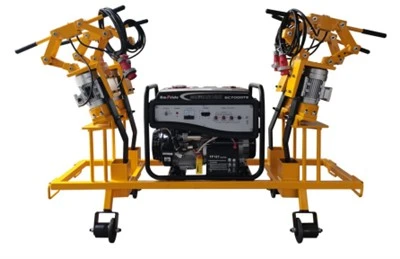
If you’re still struggling with a grinding wheel issue after trying these steps, or if you need OEM replacement parts, technical support, or a quote for a new IC rail grinding machine, our team is here to help. We work with rail maintenance crews of all sizes, from small regional operations to large national networks, to provide reliable equipment and support that keeps your rails safe and operational.
Rail Grinding Series References
- American Railway Engineering and Maintenance-of-Way Association (AREMA). “Rail Grinding Equipment and Wheel Performance Specifications.” AREMA Manual for Railway Engineering, 2022.
- Nakajima, S. “Vibration Analysis of Internal Combustion Engine-Driven Grinding Machines.” Journal of Manufacturing Systems, vol. 36, 2015, pp. 112–119.
- Norton, R.L. Machine Design: An Integrated Approach, 5th ed. Pearson Education, 2019.
- Association of American Railroads (AAR). “Best Practices for Rail Grinding Maintenance.” AAR Technical Bulletin, 2021.
Jinzhou Tiegong Railway Maintenance Machinery Co., Ltd.
With abundant experience, we are one of the most professional internal combustion rail grinding machine manufacturers and suppliers in China. Please rest assured to buy durable internal combustion rail grinding machine made in China here from our factory. Good service and quality products are available.
Address: No.837, Xingshan Street, ETDZ, Jinzhou City, Liaoning Province, China
E-mail: jztg02@vip.163.com
WebSite: https://www.tiegong-cns.com/
