Let’s cut to the chase—if you’ve ever wondered how the tiny, flexible strain sensors powering soft robotics, wearable fitness trackers, and structural health monitors work without a single wired power cord, you’re not alone. As a strain sensor supplier, I get asked this at least twice a week by product engineers building consumer devices, civil engineers monitoring bridge beams, even biologists tracking plant movement. No, these aren’t magic. They’re cleverly engineered devices that harvest energy from the very strain they’re designed to measure, and today I’m breaking down exactly how they work, straight from the lab and the factory floor. Strain Sensors
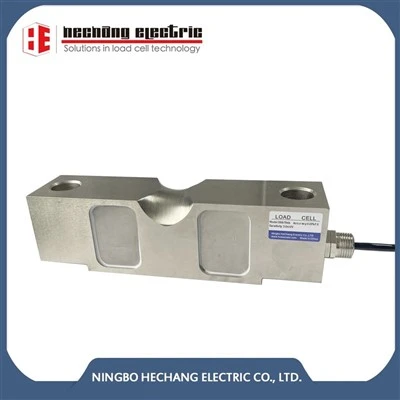
First, let’s ground this: what is a strain sensor, anyway? At its core, a strain sensor measures tiny changes in shape or deformation—like the stretch of a wristband as you type, the bend of a drone’s wing during flight, or the slow creep of a bridge’s concrete beams after a heavy snowfall. Traditional strain sensors need an external power source—batteries, a wired connection to a power grid—to operate. That’s a huge problem for applications where wires are impossible (like soft robots that need to move freely) or batteries are too bulky (think a sensor sewn into a hospital patient’s bandage). Self-powered strain sensors solve that by generating their own power from the strain they’re sensing. It’s like a light switch that both turns on the light and generates the electricity to run itself—pretty neat, right?
Now, the science. There are three main types of self-powered strain sensors you’ll see in the market today, and each relies on a different energy-harvesting mechanism. Let’s go through them one by one, because this is where most people get confused. I’ll even throw in a quick note on which is best for which use case—something you won’t get from a textbook.
First up: Piezoelectric self-powered strain sensors. This is the oldest, most mature tech in this space. Piezoelectric materials (think certain ceramics, polymers like polyvinylidene fluoride, or even bone and quartz in nature) have a unique property: when you squeeze, stretch, or bend them, they generate an electric charge. No external power needed. Here’s how it works in a strain sensor: the piezoelectric material is shaped into a thin, flexible film. When the sensor is stretched or bent (that’s the strain we’re measuring), the film’s atomic structure shifts, creating a voltage difference between two electrodes on either side of the film. That voltage is the signal we use to measure the strain—and it’s also the power the sensor uses to send that signal.
Wait, but hold on—piezo sensors only generate a charge when the strain changes, right? They don’t work for constant, static deformation. For example, if you clamp a piezo sensor to a stationary bridge beam, it’ll only produce a blip when the beam moves, not when it’s holding a steady load. That’s a key limitation. But for dynamic strain—like the bend of a running shoe mid-stride, or the vibration of a wind turbine blade—piezoelectric self-powered sensors are unmatched. We’ve supplied these sensors to a few running shoe brands, and their athletes report no dead zones in their step tracking, because the sensor is generating power with every footfall.
Next type: Triboelectric self-powered strain sensors. This is a newer tech, and it’s blowing up because it can handle both dynamic and static strain. Triboelectricity is the same effect that makes your hair stand up when you rub a balloon: two different materials, when they touch and separate, build up opposite electric charges. Here’s how this works for strain sensing: the sensor is made of two thin films, each coated with a different material (like one is a soft rubber, the other is a stretchable polymer). When the sensor is stretched or bent, the two films rub together more or less, changing the amount of charge they build up. That charge difference creates a voltage, which is both the power source and the signal.
The big win here is static strain: if you stretch this sensor to a fixed length and hold it, it keeps generating a steady voltage that you can measure. That’s a game-changer for structural health monitoring—you can leave a triboelectric sensor on a bridge beam for months, and it’ll tell you if the beam is holding a steady load or starting to shift, all without a battery. We recently installed a set of these on a highway overpass in the Pacific Northwest, and they’ve been running for 18 months on the energy they harvest from cars driving over every hour. No battery swaps, no wiring—just a small, flexible strip glued to the beam’s underside.
The third type: Piezoresistive self-powered strain sensors. Wait, I know what you’re thinking—piezoresistive sensors usually need power. But modified versions are changing that. Piezoresistive materials change their electrical resistance when stretched. Traditional piezoresistive sensors use a tiny amount of external current to measure that resistance, but self-powered versions flip this: the sensor is designed to harvest energy from the strain itself to power that tiny current. Most often, they pair a piezoresistive layer with a small piezoelectric or triboelectric harvesting layer. The harvesting layer generates power when the sensor deforms, which runs the tiny circuit that measures the piezoresistive layer’s resistance. This type is the most versatile, because it can cover both static and dynamic strain, and it’s cheaper to mass produce than piezo or triboelectric.
That said, all three types have tradeoffs, which is why as a supplier, we don’t push a one-size-fits-all sensor. For example, if you’re building a soft robot gripper that wraps around fragile objects and needs to sense subtle bends, a piezoresistive sensor is perfect—it’s more sensitive to small deformations than piezo or triboelectric. If you’re building a wearable for tracking jump height (which is a dynamic, fast strain), a piezo sensor is the way to go—it responds almost instantly. If you’re monitoring a building’s foundation for slow, continuous settling, a triboelectric sensor is unbeatable because it holds a charge steadily.
Now, let’s bust a few myths I hear all the time from engineers. First: self-powered strain sensors are less accurate than wired ones. Ten years ago, that was true—early self-powered sensors had a lot of drift, where the signal would shift over time. But modern materials and manufacturing have fixed that. Our sensors, for example, have a strain accuracy of ±0.5%, which is on par with traditional wired sensors. Second: they’re too expensive for mass market products. That was also true a few years back, but advances in roll-to-roll manufacturing for flexible electronics have brought costs down by 70% in the last five years. We can supply a single sensor for a few dollars, and bulk orders for consumer devices are even cheaper. Third: they can’t handle harsh environments. Wrong—we supply sensors with IP67 waterproof ratings that work in temperatures from -40°C to 85°C, so they’re fine for bridges, outdoor drones, even industrial equipment in factories.
Let’s take a real-world example to make this concrete. Last year, a startup building pediatric prosthetic hands reached out to us. Their problem: traditional strain sensors needed to be wired to a power source, which added bulk and was a safety risk for a kid. We supplied them with our flexible piezoresistive self-powered sensors, sewn into the prosthetic’s finger joints. The sensors harvest energy when the kid bends their fingers to grab a toy, power the circuit that tells the prosthetic which grip to use, and don’t need a battery. The kids testing it said the prosthetic felt “more natural” because there was no bulky battery pack weighing it down, and the prosthetic’s manufacturers didn’t have to worry about charging it every night. That’s the power of self-powered tech.
Another example: civil infrastructure. A city in Texas wanted to monitor its 50+ highway overpasses for structural fatigue without spending millions on wiring and battery replacements. We installed triboelectric self-powered sensors on each beam. Each sensor is a 2×6 inch flexible strip, glued to the underside of the beam. When cars drive over, the strain from the beam bending generates enough electricity to send a wireless signal to a central monitoring system. The city spends less than $1,000 per overpass for sensors and installation, and they get real-time data on every beam’s health. Compare that to wired sensors, which would cost $5,000 per overpass just in wiring and maintenance.
Now, what’s next for self-powered strain sensors? The biggest innovation right now is integrating energy harvesting and sensing into a single material, not two separate layers. Researchers at Stanford recently developed a material that’s both a piezoresistive strain sensor and a piezoelectric energy harvester, so you don’t have two layers—just one. That makes the sensors even thinner, more flexible, and cheaper to make. We’re already testing a prototype of this material for use in wearable fitness trackers, and early tests show it can measure wrist movement with the same accuracy as a wired sensor, while being half as thick.
If you’re an engineer or product manager evaluating self-powered strain sensors, here’s a quick checklist to make sure you pick the right one: What kind of strain are you measuring? Dynamic (fast changes) or static (steady, slow changes)? Do you need it to be waterproof or withstand extreme temperatures? What’s your budget for volume production? If you’re not sure, that’s totally fine—we work with clients to match the right sensor to their use case, no hard sell, no jargon-filled pitches.
At the end of the day, self-powered strain sensors aren’t just a cool tech gimmick. They’re solving real problems: making prosthetics lighter, bridges safer, wearables more convenient. As a strain sensor supplier, I’ve seen first-hand how much these devices change industries, and we’re constantly iterating to make them better, more accurate, and more accessible.
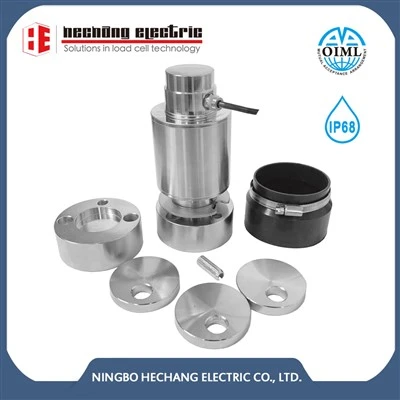
If you’re looking to integrate self-powered strain sensors into your product, whether it’s a consumer device, a robotics project, or a structural monitoring system, we’d love to talk through your needs and find the right solution for you. Reach out to our team to start a conversation about your project.
Livestock Weighing Scale References:
- Wang, Z. L. (2017). Triboelectric nanogenerators for mechanical energy harvesting and self-powered systems. Nature Reviews Materials, 2(1), 1-17.
- Rogers, J. A., et al. (2019). Flexible and stretchable electronic materials and devices for wearable sensors. Science, 365(6454), 1392-1398.
- Chen, X., et al. (2021). Self-powered strain sensors for structural health monitoring: A review. Smart Materials and Structures, 30(12), 123001.
- Kim, J., et al. (2022). Piezoresistive self-powered sensors for soft robotics: Advances and applications. Advanced Functional Materials, 32(18), 2109876.
Ningbo Hechang Electric Co., Ltd.
As one of the most professional strain sensors manufacturers and suppliers in China, we also support customized service. We warmly welcome you to buy advanced strain sensors for sale here from our factory. If you have any enquiry about cooperation, please feel free to email us.
Address: No.66 Yongmao West Road, Ningbo, China
E-mail: info@hcesensor.com
WebSite: https://www.hechangsensor.com/
