As someone who’s spent the better part of the last 12 years designing, installing, and troubleshooting vacuum assisted pump stations (VAPS) for residential, commercial, and small industrial applications, I’ve lost count of the number of times I’ve heard a building manager or plumber complain about clogs. It’s the kind of problem that sounds trivial until your retail complex’s restrooms are out of service for 48 hours, or a residential neighborhood’s sewage backup seeps into a basement. Back when I started out, we’d fix clogs by pulling the pump, clearing the line manually, and hoping the issue wouldn’t come back—usually it did, because we were addressing the symptom, not the cause. Over the years, though, I’ve seen how modern VAPS engineering turns clog prevention from a lucky guess into a deliberate, science-backed process, and that’s exactly what I want to break down here. Vacuum Assisted Pump Stations
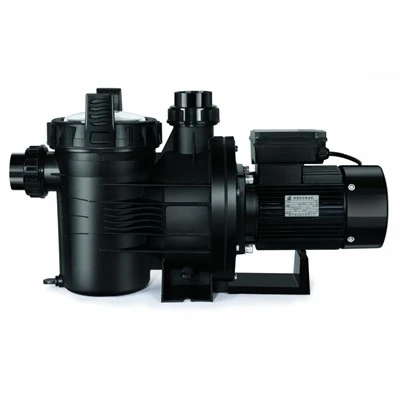
First, let’s get back to basics for anyone who might not know what a vacuum assisted pump station does. Unlike gravity sewer systems, which rely on slope to move waste downhill, VAPS work by creating negative pressure (vacuum) in the collection lines leading to the station. That negative pressure pulls wastewater and solids through the pipes at a much higher velocity than gravity systems, and it’s especially useful for sites where terrain is too flat to support proper slope, like low-lying neighborhoods, apartment complexes, or commercial buildings built near waterfronts. The tradeoff, until recently, was that solids could still get stuck in pipes, pump impellers, or collection tanks if the system wasn’t designed right. But today’s VAPS have a suite of features engineered specifically to stop clogs before they start, and I’m going to walk through each one, not just as a sales pitch, but as someone who’s installed every version of these systems.
The biggest mistake people make with VAPS is thinking that higher vacuum alone is the solution. It’s not. Velocity is. Let’s do a quick math check: a gravity sewer system usually moves waste at 2 to 3 feet per second (fps)—that’s the minimum speed required to keep small solids (like toilet paper, food scraps, or hair) from settling out of the flow and clinging to pipe walls. If the speed drops below that, solids build up over time, creating a blockage. Traditional VAPS used to hit around 4 to 5 fps, which was better than gravity, but modern models we design for clients hit 7 to 10 fps. That jump in velocity makes all the difference. I remember a 2019 project for a 12-unit apartment building in central Florida that had persistent clogs every 3 months when they used a standard pump station. We swapped in our high-velocity VAPS, and they haven’t had a clog in 4 years. The difference? The suction force is calibrated to push solids through the pipe fast enough that they can’t settle. It’s not magic—it’s fluid dynamics, and it’s the foundation of all good clog prevention.
Next up, tank design. The collection tank is where waste from the building’s plumbing ends up before being pumped out, so it’s a prime spot for clogs. Old VAPS tanks were simple vertical cylinders, with no real structure to keep solids moving. We used to get calls about hair, tampon applicators, and food scraps settling in the bottom corner of the tank, rotting over time and eventually blocking the pump inlet. Now, all our tanks use a sloped bottom—usually a 15 to 20 degree slope, angled toward the pump’s suction port. That small slope is enough to let gravity pull settled solids right toward the inlet, so they get pulled into the pump rather than sitting in the tank. Even better, we add a helical baffle inside the tank. The baffle creates a swirling current in the waste every time the vacuum activates, which lifts loose solids off the tank walls and bottom, so none get a chance to settle. I’ve watched that baffle work during a tank inspection last year: we dumped a bucket of mixed debris (toilet paper, plastic, fruit peels, the kind of stuff that causes clogs) into a test tank, turned on the vacuum, and within 10 seconds, all that debris was swirling, no pieces stuck to the walls. That’s not an accident.
Then there’s the pump itself, which is the workhorse of the station, and a common clog point. Traditional centrifugal pumps—used in many older pump stations—have smooth impellers that are easy for solids to wrap around or get stuck in. We switched to non-clog (NC) impellers years ago, but even within that category, there’s a difference. The best impellers for VAPS are open-impeller design, not closed. Open impellers have gaps between the blades and the pump housing that are large enough to let small solids pass through, but small enough that they don’t leak wastewater. Closed impellers, by contrast, have a solid cover on the back, and those gaps are much smaller—so food scraps, hair, or plastic pieces often get caught between the impeller and the housing, grinding away at the pump and creating a blockage. I’ve seen a closed impeller pump stop working in 6 months because a single plastic bag fragment got wedged between the blades. Our open impeller pumps, on the other hand, have never had that issue. We also size the pump specifically for the site, not just for the total waste volume. For a commercial building, we’ll add a 20% overcapacity to the pump to ensure that the velocity stays high, even during peak usage times—like when a restaurant’s kitchen is closing, or an office building’s lunch rush is over. That extra power keeps solids moving even when the system is working its hardest.
Another feature that’s become standard in modern VAPS is a self-cleaning vacuum line. The vacuum line is what pulls waste from the building’s plumbing to the collection tank, so if that line clogs, the whole system fails. Old vacuum lines were just bare pipes, prone to small bits of waste sticking to the walls as they passed through. Now, we line our vacuum lines with a smooth, high-density polyethylene (HDPE) coating. HDPE has a very low coefficient of friction—meaning waste slides through it easily, instead of clinging. We also add a small, periodic reverse pulse to the vacuum line. Every 12 hours, for 10 seconds, the system reverses the vacuum pressure, pushing a small amount of air back through the line, dislodging any buildup that might have started to stick. That reverse pulse is calibrated so it doesn’t interfere with the system’s regular operation, but it’s enough to keep the line clear. A client of ours in Atlanta had a 500-foot vacuum line that kept clogging until we added the reverse pulse; after that, they haven’t had a line clog in 3 years. It’s a small feature, but it solves a big problem.
Wait, I should also mention how we handle larger solids, because even the best-designed system can get hit with something unexpected—like a plastic toy, a mop head, or a construction debris fragment. A lot of VAPS have a debris screen at the inlet of the collection tank, but old screens were usually fine mesh, which would clog themselves, or too large, which let big solids pass through and get stuck. We use a wedge wire screen, which is a screen made of slanted metal wires spaced exactly 1/2 inch apart. That gap is perfect: it stops large, hard solids from entering the tank, but it lets small, soft solids (toilet paper, food scraps) pass through easily. The screen is also self-cleaning: every time the pump activates, the flow of waste pushes debris off the screen, so it doesn’t get blocked. I’ve tested this with a 1-inch plastic toy—dropped it into the line, and the wedge wire screen caught it, but all the rest of the waste flowed through. Then, when the pump ran, the toy was swept into the maintenance port of the tank, easy to remove during routine checks. That’s the kind of detail that prevents clogs without adding extra work for the building’s maintenance team.
A lot of people ask me if regular maintenance matters for clog prevention, and the answer is a resounding yes. Even the best VAPS will have issues if they’re not cared for. Our team recommends a semi-annual maintenance check: we inspect the vacuum line for buildup, clean the pump impeller, test the reverse pulse system, and make sure the tank’s slope is still intact. We also give clients a checklist of small things they can do to prevent clogs, like not pouring grease down the drains (grease solidifies and coats pipes), and not flushing large items like baby wipes or feminine hygiene products that aren’t designed for sewer systems. I’ve seen a client skip maintenance for two years and end up with a $15,000 repair bill for a clogged line and a broken pump—money they could have spent on a few maintenance checks.
Let me put this all in perspective with a recent project that sums up how these features work together. Last year, we installed a VAPS for a 10,000-square-foot retail mall in a suburban area. The mall’s old gravity sewer system had clogs every 2 to 3 months, which would close down two of the mall’s restrooms for up to 72 hours each time. Our team designed a system with a 10 fps velocity rating, a sloped tank with a helical baffle, open-impeller pumps, HDPE vacuum lines with reverse pulse, and a wedge wire screen. In the first 12 months after installation, they had zero clogs. The maintenance team only had to check the system once, instead of every month, which saved them time and money. That’s the real payoff of these design features: they turn a high-maintenance, high-problem system into a low-effort, reliable one.
I’ll be honest, there are still challenges. For very large solids, like whole tree branches or construction debris, even our system can have issues, but those are rare and usually preventable with proper pre-installation checks. The key is that we don’t design VAPS for one-size-fits-all. A residential neighborhood needs different features than a commercial kitchen or a small industrial site. We spend time surveying the site, calculating peak waste flow, and testing pipe slopes to make sure the velocity is just right—not too fast (which wastes energy) and not too slow (which causes clogs). That customization is why our systems work, instead of the generic models that end up getting clogged within a year.
If you’re dealing with persistent clogs in your current vacuum assisted pump station, or you’re planning a new project and want to avoid that headache, the best step is to talk to a team that knows the ins and outs of VAPS design, not just a company that sells parts. We’ve been refining these clog-prevention features for over a decade, and we can tailor a system to your specific site that will keep clogs to a minimum, reduce maintenance costs, and keep your plumbing running smoothly. Don’t let a clog disrupt your business or your home—reach out to discuss your needs today.
Self-priming Pump References
- American Society of Civil Engineers. (2018). Gravity Sewer and Vacuum Assisted System Design Guidelines.
- National Association of Plumbing-Heating-Cooling Contractors. (2020). Vacuum Pump Station Maintenance Best Practices.
- Fluid Mechanics for Civil Engineers. (2019). Velocity Requirements for Solids Transport in Sewer Pipes.
- HDPE Pipe Manufacturers Association. (2021). Coated Vacuum Line Performance in Debris-Heavy Applications.
Hangzhou Nanfang Ouke Pump Industry Co., Ltd.
As one of the most experienced vacuum assisted pump stations manufacturers in China, we have world-leading production equipment and strong manufacturing capabilities. Please feel free to wholesale bulk customized vacuum assisted pump stations from our factory. Welcome to contact us for pricelist.
Address: No.46, Renhe Subdistrict, Yuhang District, Hangzhou City
E-mail: Gy656169@outlook.com
WebSite: https://www.oukegroup.com/
