If you’ve ever spent time browsing our RC heli and airplane battery shop, you might have glanced at a spec sheet and wondered: why does a 3S 5000mAh LiPo feel so different than a 4S 5000mAh of the same brand? Or why does a micro quad battery weigh next to nothing, while a 12S battery for a 50-class helicopter feels like a small brick? As a supplier who’s been immersed in the RC battery space for over a decade, I get this question all the time—and it’s not just a random number; it’s tied to performance, design, and what your model actually needs. RC Heli & Airplane Battery
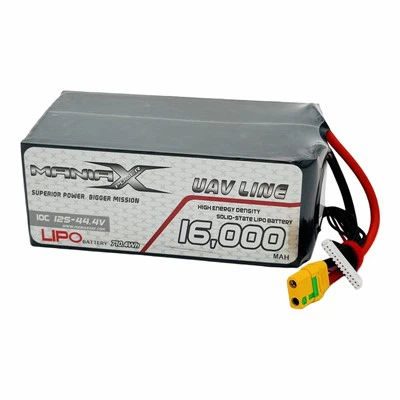
Let’s start with the basics: RC batteries are almost exclusively lithium-polymer (LiPo) these days, and their weight isn’t just about the capacity written on the label. Sure, mAh (milliampere-hours) is a measure of how much energy a battery can store, but voltage, cell count, and the physical construction of the battery pack play huge roles too. I’ve seen customers skip over this detail and end up with a battery that’s either too heavy to get their heli off the ground or too light to last a flight. That’s why breaking down the factors makes all the difference.
First, cell count and voltage. LiPo cells each have a nominal voltage of 3.7V, right? So a 2S battery is two cells in series, for 7.4V total; a 3S is 11.1V; a 6S is 22.2V. If you compare two batteries with the same mAh rating, say 5000mAh, a 3S will weigh more than a 2S because it has an extra cell—more raw materials, more internal space for wiring and cell connections. For example, a 2S 5000mAh LiPo might tip the scales around 180 grams, while a 3S 5000mAh of the same cell density is closer to 220 grams, and a 6S 5000mAh could be 300 grams or more. That extra weight isn’t just fluff; higher voltage lets your motor turn faster or deliver more torque, which is critical for larger helis or fast planes. The tradeoff is weight, and it’s a balance we help customers navigate every day.
Then there’s capacity, the mAh number. Higher mAh means more energy, so more lithium, more electrolyte, and thicker cell walls to hold that energy. A small micro heli battery, like a 1S 150mAh, weighs barely 5 grams—light enough that you might forget it’s even attached. Move up to a 3S 1000mAh for a 250-size quad, and that jumps to around 40 grams. For a 550-size helicopter that needs to stay aloft for 10 minutes, a 6S 4000mAh battery is typically 180 to 200 grams. It makes sense: if you want longer flight time, you need more energy stored, which adds weight. But here’s a tip we share with new hobbyists: don’t just grab the highest mAh battery you can find. Too much weight will put excess strain on your motor and ESC (electronic speed controller), and could lead to shorter motor life or even a crash if your model can’t lift off.
Cell density is another big factor that changes weight. Not all LiPo cells are created equal. Some manufacturers use higher-density materials that pack more energy into the same physical space, so a 5000mAh battery from a premium brand might weigh 20 grams less than a budget 5000mAh pack of the same cell count. For example, I’ve had customers compare a budget 4S 5000mAh (250 grams) to our high-density 4S 5000mAh (225 grams) for their 450-size heli. The lighter battery didn’t just make their heli more agile—it also let them add a camera mount without exceeding weight limits. That’s why we stock both options: budget packs for casual fliers, and high-density packs for racers or pilots who prioritize performance.
You also have to consider the battery’s physical dimensions. A battery that’s the same cell count and mAh, but has a thinner profile for easier fitting into a smaller plane or heli, will weigh less than a bulkier pack of the same specs. For instance, a “shorty” LiPo for a 1/10 scale RC car or a micro plane is designed to fit tight spaces, so a 2S 3000mAh shorty might weigh 130 grams, while a standard 2S 3000mAh would be longer and weigh 150 grams. That weight difference is small, but it can change how your model handles—especially in aerobatic planes where every gram affects thrust and maneuverability.
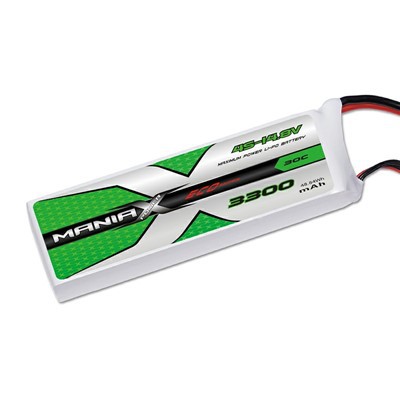
Now, let’s put this into real-world examples that our customers deal with every day. If you fly a 450-size RC helicopter, which is one of the most common models for intermediate pilots, you’ll typically use a 3S or 4S battery. A 3S 3300mAh battery for a 450 heli weighs about 150 grams, which gives you 6 to 8 minutes of flight time. If you upgrade to a high-density 4S 3300mAh, it’s 170 grams, but the extra voltage gives you more torque for flips and loops, so the tradeoff in weight is worth it. For a smaller 250-size quadcopter, batteries are even lighter: a 4S 150mAh race battery weighs just 20 grams, which keeps the quad responsive for fast flying.
For RC planes, the weight varies too. A small park flyer, like a 30-inch wingspan glider, uses 2S or 3S batteries. A 2S 1000mAh battery for this kind of plane weighs around 55 grams, perfect for slow, smooth flights. A larger aerobatic plane with a 60-inch wingspan will need a 4S or 5S battery to power its brushless motor, so a 5S 4000mAh battery for that plane weighs about 230 grams, giving you 10 to 12 minutes of flight time. I once had a customer who bought a cheap, heavy battery for his 60-inch plane and couldn’t get it to lift off—swapping it for a lighter, high-density pack fixed the problem immediately. That’s the kind of on-the-ground advice we live to give.
You might also be wondering: does weight matter for safety? Absolutely. Overweight LiPo batteries are more prone to swelling, which can cause fires if the cell walls break. A battery that’s too light for your model’s needs can also overwork the motor, leading to overheating and damage. That’s why we always emphasize matching battery weight to your model’s specifications. For example, a rule of thumb for RC helicopters is that the battery should make up 15 to 20% of the model’s total weight. For a 450 heli that weighs 1,000 grams total, a 150 to 200 gram battery is perfect. Too heavy, and the heli struggles to maintain altitude; too light, and it’s unstable.
Another point: battery connectors and wiring. Even small, seemingly insignificant parts add a tiny amount of weight. A high-quality XT60 connector is a few grams heavier than a cheap knockoff, but it’s more durable and has better conductivity, which reduces power loss. For serious fliers, that small weight difference is worth it, because it means more power gets to the motor instead of being wasted as heat. We offer both connectors, so you can choose based on your needs.
Now, let’s talk about how we, as a supplier, approach this. We don’t just list mAh and voltage on our product pages—we also include weight, dimensions, and recommended model types, because we know how important that info is. We test every battery we sell in real models, not just in a lab. Last year, we worked with a group of RC heli pilots to test two 6S 5000mAh packs: a standard-density budget pack (310 grams) and our high-density premium pack (280 grams). The pilots reported that the lighter pack was more responsive, and flight time was almost identical, because the premium cells had lower internal resistance, so less power was wasted. That’s the kind of data we use to curate our inventory.
If you’re a new hobbyist still figuring out what weight battery to get, here’s a simple starting point: check your model’s manual. Most manufacturers list recommended battery specs, including weight. If you don’t have a manual, send us a message with your model’s size and type, and we’ll point you in the right direction. We don’t just sell batteries—we help people enjoy their hobby without the stress of crashes or underperforming models.
Whether you’re a casual flier who just wants to get a few flights in on the weekend, or a racer who’s chasing every gram to shave milliseconds off your lap times, the weight of your RC heli or airplane battery is a critical detail. It’s not just a number on a label—it’s a factor that affects flight time, agility, safety, and even how much fun you have. At the end of the day, the right battery weight means you can focus on flying, not troubleshooting a model that won’t lift off.
If you’re ready to find the right battery for your RC heli or airplane, or have questions about weight, cell count, or any other specs, reach out to our team to discuss your needs. We’re here to help you make the best choice for your model and your flying style.
45C RC Aircraft Lipo Battery References:
- LiPo Battery Fundamentals. RC Flight Journal, 2022.
- Understanding Battery Weight and Performance in RC Models. Model Aircraft Magazine, 2021.
- Lithium-Polymer Cell Density and Its Impact on RC Battery Design. Battery University, 2023.
- Weight Balance Guidelines for RC Helicopters. Helicopter Hobbyist Association, 2022.
- Connector and Wiring Weight in RC Power Systems. RC Tech Review, 2021.
ManiaX Power Technology Co., Ltd.
ManiaX Power Technology Co., Ltd. is one of the most reliable rc heli & airplane battery manufacturers and suppliers in China, also supports customized service. Please feel free to wholesale bulk durable rc heli & airplane battery made in China here from our factory.
Address: Room 1508, 15/F, Two Grand tower, 625 Nathan Road, Kowloon, HongKong. P.R. China
E-mail: info@maniax-power.com
WebSite: https://www.maniaxpower.com/
