Hey everyone, if you’ve ever worked with linear modules or slide tables—whether you’re an automation engineer, a maintenance tech, or someone just building a custom machine—you’ve probably asked yourself this question at some point: “What’s the max static torque my linear module can actually handle?” Trust me, I get it. I’ve been selling linear modules and slide tables for over 12 years now, and this is one of the most common (and most misunderstood) questions people bring to our table. A lot of folks just look at a spec sheet, see a random torque number, and assume that’s the end of it—but there’s way more to it than that. Let’s break this down like we’re chatting over a coffee (no stuffy engineering jargon, I promise), from the perspective of someone who’s been on the shop floor and in the customer’s test lab. Slide Table and Linear Module
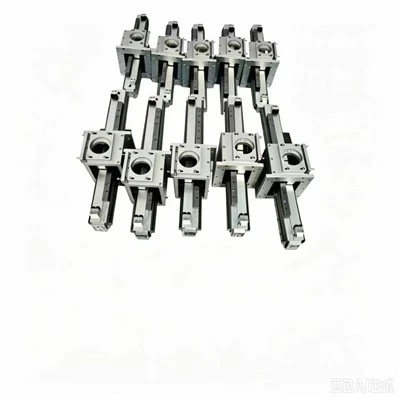
First off, let’s get one thing straight: static torque isn’t just some arbitrary number a manufacturer pulls out of thin air. It’s the maximum twisting force a linear module can hold without moving when it’s not powered (so no motor help here—just gravity, awkward loads, or whatever’s hanging off it). Why does this matter? Let’s say you’re using a linear module to lift a heavy camera over a conveyor line, or hold a 50kg robotic arm steady while it picks parts. If the static torque is too low, that arm’s going to droop, wobble, or even slip when you hit a stop—bad news for precision, and way worse for safety.
Now, here’s the part most people miss: static torque doesn’t live in a vacuum. It depends on three big factors, and I see customers mess these up all the time when they’re sizing a module. Let’s start with the load itself. It’s not just the total weight— it’s where that weight is. Imagine a linear module mounted horizontally vs. vertically. If you’ve got a load sticking out from the module’s carriage (that’s the part that slides back and forth) like a shelf holding a toolbox, that creates what engineers call “overhang” or “moment load.” Let’s do a quick real-world example: say a linear module with a 100kg carriage. If you mount a 20kg box dead-center on the carriage, the moment is low, and the static torque is easy to handle. But if you move that same 20kg box 30cm away from the carriage’s center, the moment load spikes. That moment directly translates to twisting force on the module’s drive system—usually the lead screw or the linear rail’s bearings. I’ve had a customer come to me last quarter with a project where they put a 40kg motor 25cm off the carriage’s center on a module he bought from a no-name supplier. He complained it “couldn’t hold the load” and the carriage was tilting. Turns out the module’s rated static torque was for a center-mounted load, not an overhang—he didn’t account for that extra twist from the off-center weight.
Second factor: how the module is mounted. Are you bolting it to a rigid steel frame, or a flimsy aluminum extrusion that flexes? If the mount is wobbly, that will kill your effective static torque faster than anything. I remember a guy who was using our slide tables for a custom sign flipper—he mounted the linear module to a thin wooden workbench instead of a proper rigid frame. When he tested a 30kg sign, the whole bench twisted, and the module’s static torque (which was good on paper) was useless because the mount itself was flexing. Rigidity is key here. If your module’s not anchored to a stiff, flat surface, that twisting force from the load won’t just act on the module’s internal parts—it’ll bend the whole setup, making the static torque rating irrelevant.
Third, and this is a big one for us as suppliers: the type of linear module you’re using. Not all modules are created equal. We sell two main types of linear modules: ball screw-driven and belt-driven. Ball screw modules, generally, have higher static torque ratings because the screw and the nut have more surface area to distribute the load and resist twisting. Belt-driven modules are lighter and faster, but their static torque is lower—because the belt can stretch or slip if the twist is too high. Wait, but don’t take that as “ball screw = better for high static torque” across the board. It also depends on the size of the ball screw, the number of bearing supports on the rail, and the material of the carriage. For example, our heavy-duty ball screw linear modules have a static torque rating of up to 120 Nm, but that’s for a properly centered load on a rigid mount. Our compact belt-driven modules top out at around 35 Nm, which is perfect for smaller, lighter loads—like in a lab automation setup where you’re moving test tubes, not 100kg industrial components.
Let’s talk about how manufacturers actually calculate static torque, because if you look at a spec sheet, you’ll usually see something like “static moment load capacity” or “maximum static torque (Mst).” Most reputable suppliers (like us) calculate this by testing the module in the worst-case scenario for static load: maximum overhang, minimal support, no power, for 24 hours straight. If it doesn’t shift more than a few tenths of a millimeter, that number is valid. The cheap no-name modules you find online? Their static torque numbers are usually just theoretical, not tested, or calculated for a perfect center load on a rigid mount—so when you use it in the real world, it falls apart. I’ve seen that firsthand: a customer bought a super cheap module from a marketplace site for $200 cheaper than ours, and when he put a 15kg load 20cm over the carriage, the lead screw bent. Our equivalent module, rated for 40 Nm static torque, handled that same load no problem because we test every unit before it leaves our warehouse.
Now, here’s a common myth I want to bust: static torque is not the same as dynamic torque. Dynamic torque is what you need when the module is moving—accelerating, decelerating, or lifting a load while sliding. Static torque is only for when it’s stopped. So if you’re using a linear module for a positioning application where the load is held steady 99% of the time (like a CNC machine’s Z-axis holding a cutting tool in place), static torque is way more important than dynamic torque. But if you’re moving a load back and forth nonstop (like a packaging line sorting boxes), dynamic torque is your main concern. A lot of engineers mix these up and undersize a module because they look at the dynamic torque instead of the static one, or vice versa. I’ve had a few folks tell me, “My dynamic torque is 20 Nm, so I’m good” only to come back a month later saying the carriage is slipping when it’s holding a heavy load stopped—because they forgot static torque is a separate, higher requirement for holding loads in place.
Wait, let’s get specific with a example that’s relatable. Let’s say you’re building a pick-and-place robot for a small manufacturing line. You need a linear module to move a gripper that weighs 8kg, and it’s going to hold that gripper at the end of a 15cm arm that sticks out from the carriage. Let’s calculate the approximate static torque here. The total moment is (8kg * 9.8m/s²) * 0.15m = ~11.76 Nm. Now, if you’re using our standard ball screw linear module, which has a static torque rating of 40 Nm, that’s way more than enough—you’ve got a safety factor of over 3, which is what we always recommend. But if you used a cheap belt-driven module with a 15 Nm static torque, that safety factor is only ~1.2, which is too low. You’ll see droop over time, maybe even belt slip. If that gripper is holding a 5kg part on top of its own 8kg weight, the moment jumps to ~20.58 Nm, and now even the standard belt module is out—you need the ball screw model.
Another thing to consider: temperature and wear. If your linear module is running in a hot environment—like a food processing plant where it’s near an oven, or a metal fabrication shop with welding fumes—the lubrication breaks down faster. That lowers the static torque over time, because the bearings and screw don’t have the same friction to hold the load. Same with wear: if you’re running the module every day, the lead screw nut will wear slightly after a year or two, reducing its ability to resist twisting. That’s why it’s important to not just look at the new static torque number, but also ask about the module’s wear resistance—something we prioritize in our slide tables and linear modules. We use precision-ground lead screws instead of rolled ones, which have less wear and maintain their static torque rating longer than cheaper rolled screws.
I know this sounds like a lot, but here’s the takeaway: you can’t just grab a linear module based on a random torque number. You need to factor in the load’s weight, its position (overhang or not), the rigidity of your mount, and the type of module (ball screw vs belt) that fits your application. If you’re ever unsure, don’t guess—reach out to us. That’s what we’re here for. We’ve helped hundreds of engineers size the right module for their project, whether it’s a small lab setup or a heavy industrial automation line. We don’t just sell parts—we walk through the math with you, ask you the right questions (how far is your load overhanging? What’s your mount rigidity? Do you need it for static holding or moving?), and point you to the module that’s going to work, not just meet a spec.
I’ve been in this game long enough to know that cutting corners on linear modules ends up costing more in the long run. A $200 cheaper module that fails in 6 months will cost you downtime, repairs, and lost production. Spending a little more upfront on a quality linear module with a tested static torque rating that fits your actual needs saves you all that hassle.
So next time you’re sizing a slide table or linear module for a project, don’t just scroll for the lowest price or the biggest torque number. Think about where the load is, how it’s mounted, and whether that static torque is actually going to hold when the power’s off. And if you’re not sure, hit us up. We’re here to make this stuff simple, so you can get back to building whatever you’re working on. No confusing jargon, no hidden fine print—just straight talk from someone who’s been in your shoes, troubleshooting these exact issues for years.
That’s all for now, but if you have questions about static torque, linear module sizing, or anything related to slide tables, drop us a line. We’d love to help.
Manipulator References:
- Bosse, S., et al. (2020). Linear Motion Systems: Design, Selection, and Application. Industrial Press.
- American Society of Mechanical Engineers (ASME). (2018). B106.1M-2018: Linear Motion Ball Screw Drives.
- Linear Motion Manufacturers Association (LMMA). (2021). Static Load Capacity Guidelines for Linear Modules.
Yangning (Xiamen) Intelligent Technology Co., Ltd.
With abundant experience, we are one of the most professional slide table and linear module manufacturers in China. As we have world-leading production equipment and strong manufacturing capabilities, we warmly welcome you to buy bulk advanced slide table and linear module from our factory. Customized orders are welcome.
Address: Room 307-2, No. 15 Duiying Road, Software Park Phase III, Torch Hi-Tech Zone, Xiamen, Fujian, China
E-mail: mia@ynautos.com
WebSite: https://www.ynautos.com/
