Can a frying pan be used for making quesadillas?
If you’ve ever stared at a quesadilla recipe that calls for a comal or a griddle, then reached into your cabinet and grabbed your go-to frying pan, you’re not alone. As a frying pan supplier, I hear this question almost every week from home cooks and small café owners alike: “Is my regular frying pan actually good enough for a crispy, perfectly melted quesadilla?” The short answer? Absolutely—and in fact, it might just be the best tool you didn’t know you needed for this classic Mexican dish. Let me break this down, from the science of heat distribution to the little tricks that make a frying pan work better than you think for quesadillas. Frying Pan
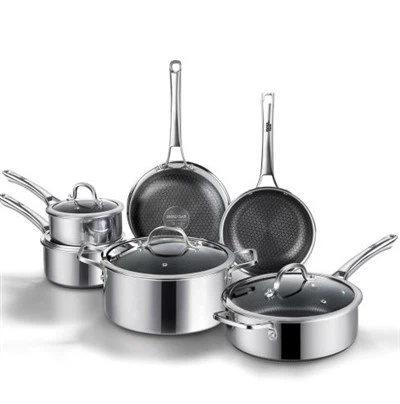
First, let’s get one thing straight: a quesadilla is essentially a folded tortilla filled with cheese (and whatever else you want—chicken, veggies, beans) that needs two key things to turn out right: even heat to melt the cheese without burning the tortilla, and enough surface pressure to stick the layers together so it doesn’t fall apart when you cut it. Frying pans are designed to deliver both, which is why they’re a staple in kitchens around the world, not just for frying eggs or bacon.
When I say “frying pan,” I’m not talking about a crepe pan or a tiny skillet meant for one egg—though those can work in a pinch. I’m referring to a standard, medium-depth frying pan (usually 10 to 12 inches) with a flat bottom. The flat bottom is non-negotiable here, because it means every inch of the tortilla touches the heat source evenly. A lot of people struggle with quesadillas that have burnt edges and cold, unmelted cheese in the center—that’s usually because they’re using a pan with a warped bottom, or turning the heat too high. A quality frying pan, the kind we supply, solves that problem because its manufacturing process ensures a perfectly flat, consistent base that distributes heat uniformly.
Let’s talk about the science of heat here. Comales, which are the traditional clay or metal griddles used for quesadillas, are thick and retain heat well, but they take a long time to preheat and can be hard to adjust. Frying pans, especially stainless steel or cast iron ones (two of the most popular options for serious home cooks), have thermal conductivity that’s ideal for this. Cast iron, for example, takes a minute to heat up, but once it’s at the right temperature, it stays there—no hot spots that will singe the tortilla. Stainless steel pans, on the other hand, heat up quickly and evenly, making them great for people who don’t want to wait around. Non-stick frying pans work too, though you have to be a little careful with the heat, since the coating can degrade if exposed to too much direct flame.
Now, here’s where a lot of people go wrong: they put the quesadilla in the pan and walk away, or crank the heat to high to make it fast. That’s a mistake. The best way to use a frying pan for quesadillas is to preheat it on medium heat for 2 to 3 minutes first. You should be able to feel a gentle warmth when you hold your hand about an inch above the surface, but not so hot that you can’t keep it there. Then, lay your folded tortilla in the pan. If your tortilla has any loose edges, you can press them down gently with a spatula to seal them—this is where the flat bottom of the pan helps, because the pressure is even all around.
Wait about 2 to 3 minutes, until the bottom of the tortilla is golden and crispy, then flip it. Here’s a pro trick from our team of suppliers: if you want extra crunch, place a heat-safe plate or a smaller skillet on top of the quesadilla after flipping. This adds uniform pressure, which helps the cheese melt faster and the tortilla get crispy on both sides without burning. That’s something a lot of people don’t realize frying pans are great for—they let you apply that even, gentle pressure that turns a messy folded tortilla into a neat, restaurant-style quesadilla.
But let’s address the elephant in the room: some people say frying pans make quesadillas too greasy. That’s only if you’re using too much oil. The best trick here is to use a tiny bit of oil or butter on the surface of the pan—just a drop, spread thin with a paper towel. You don’t need to coat the whole pan, because the tortilla will release some moisture as it cooks, which acts as its own little grease. If you’re using a cast iron frying pan, you might not even need any oil at all—its seasoned surface is non-stick enough for quesadillas, and it will give you that beautiful, crispy brown crust without extra fat.
I’ve seen this first-hand with customers of our frying pans. One home cook told me she used to make quesadillas on a makeshift griddle she bought at a craft store, and they always turned out lopsided and half-cooked. After switching to our 12-inch flat-bottom frying pan, she said her quesadillas were “better than the ones at the local Mexican restaurant.” A small taquer operator reached out to us last year, saying he was replacing his old griddles with our frying pans for his lunch service—they’re smaller, easier to clean, and he can make two quesadillas at a time instead of one. That’s the thing about frying pans: they’re versatile enough for home cooking and small commercial use, which makes them a great investment if you love quesadillas.
Now, what about different types of frying pans? Can you use a non-stick one? Absolutely—just lower the heat a little, because non-stick coatings can start to break down at temperatures above 500 degrees Fahrenheit, and quesadillas don’t need that kind of heat anyway. A non-stick frying pan is perfect for people who don’t want to worry about their tortilla sticking, or for kids who help make quesadillas—no need to scrub burnt cheese off a seasoned pan later. Cast iron is another great option, though it requires a tiny bit more care (seasoning it occasionally, washing it with hot water, no soap if you can help it) but the payoff is that delicious, rustic crunch that’s hard to beat. Stainless steel frying pans, which are durable and work for everything from searing steak to making quesadillas, are the middle ground—they heat evenly, don’t have coating issues, and are easy to clean.
One common myth I hear is that frying pans are too deep for quesadillas, but that’s not a problem. The depth actually works in your favor when you’re adding fillings—you can load up on cheese, veggies, or meat without worrying about it spilling out, as long as you fold the tortilla tightly. Just make sure you don’t overstuff it—if your quesadilla is too full, the fillings will leak out while it cooks. Our frying pans have a 2-inch depth, which is deep enough to contain fillings but not so deep that it traps steam and makes the tortilla soggy. That balance is key.
Let’s talk about common mistakes to avoid when using a frying pan for quesadillas. First, don’t use a pan that’s too small. A 10-inch pan works for personal quesadillas, but if you want a larger one (the kind that feeds two people), go for 12 inches. Second, don’t use high heat. Quesadillas need slow, even heat to melt the cheese thoroughly—if the heat is too high, the tortilla will burn before the cheese is even soft. Third, don’t flip the quesadilla too early. Wait until the bottom is golden and crispy before flipping—if you flip it too soon, the tortilla will tear and the cheese will ooz out. Fourth, don’t skip the rest time. After cooking, let the quesadilla sit for a minute or two before cutting it into wedges. This lets the cheese set so it doesn’t run all over the plate.
As a frying pan supplier, I’ve tested all of these methods with our products, and I can tell you that a good frying pan makes all the difference. I’ve watched my team test quesadillas on every type of pan we carry, and the ones with perfectly flat bottoms always turn out the best. The uneven heat on a warped pan can leave one side of the tortilla burnt and the other pale, which is frustrating when you’re trying to make a simple meal. Our frying pans are precision-manufactured to have a flat bottom, so you get that even heat every single time.
Another thing to consider: cleaning. Frying pans are easy to clean, which is a big plus after making a messy quesadilla. Non-stick pans just need a quick wipe, while cast iron can be washed with a sponge and hot water. If a little cheese gets stuck on the pan, just fill it with a little warm water and let it sit for a minute—stuck food will lift right off, no scrubbing required. That’s way easier than cleaning a traditional comal, which has deep grooves and can be hard to get cheese out of.
Wait, but what if you’re a purist who swears by comales? I get it—comales have been used for centuries for a reason. But that doesn’t mean a frying pan can’t replicate the same result. I’ve had Mexican friends try quesadillas made on our frying pans and say they’re just as good as the ones made on a comal. The key is the even heat and the right pressure, which a good frying pan delivers. It’s not about using the “right” tool—it’s about using a tool that works, and a frying pan is one of the most versatile tools in any kitchen.
Let’s also think about portability. If you’re making quesadillas for a campout or a picnic, a frying pan is way easier to transport than a heavy comal. You can toss a frying pan in a cooler, set it over a camp stove, and make quesadillas on the go. That’s a big plus for people who love outdoor cooking. I’ve had customers buy our frying pans specifically for camping, saying they use them to make quesadillas and breakfast burritos over the fire.
Now, let’s address a few specific questions we get from customers. Someone asked recently: “Can I use a 8-inch frying pan for a quesadilla?” Yes, but it will be a small one, perfect for a single serving. Another customer asked: “Do I need to oil the pan?” It depends on the pan. Non-stick pans might not need any oil at all, while cast iron might benefit from a light coat. If you’re using a stainless steel pan, a tiny bit of oil will help prevent sticking. And one more: “Can I make multiple quesadillas at once?” With a 12-inch frying pan, you can make two smaller quesadillas at the same time, which is great for feeding a family.

At the end of the day, a frying pan is more than just a tool for frying. It’s a versatile piece of equipment that works for everything from searing meat to baking cookies, and yes—making quesadillas. The science is there: even heat distribution, uniform pressure, and easy cleanup. As someone who supplies frying pans to home cooks and small businesses, I can confidently say that a quality frying pan is perfect for quesadillas, and you don’t need a special tool to make a great one.
Wok If you’re looking for a frying pan that will give you consistent, crispy quesadillas every time, we have a range of options to fit your needs—from non-stick pans for everyday home use to heavy-duty stainless steel for commercial kitchens. Whether you’re making a quick lunch for yourself or a tray of quesadillas for a party, the right frying pan will make the process easy and the result delicious. If you’re interested in learning more about our frying pans or how they work for quesadillas, feel free to reach out to our team for a consultation. We’re happy to help you find the perfect pan for your kitchen, so you can make quesadillas that are crispy, melty, and exactly how you like them.
References
- López-Alt, J. (2015). The Food Lab: Better Home Cooking Through Science. W. W. Norton & Company.
- García, M. (2021). Traditional Mexican Cooking Tools: A Guide to Comales and Beyond. Latin American Food Journal.
- Cast Iron Institute. (2022). The Benefits of Cast Iron Cookware for Home Cooking.
- National Restaurant Association. (2023). Small Kitchen Equipment for Quesadilla Service in Independent Restaurants.
- Home Cook Magazine. (2022). The Versatility of Frying Pans: Beyond Breakfast and Frying.
Zhejiang Nanyue Kitchenware Co., Ltd.
We’re well-known as one of the leading frying pan manufacturers and suppliers in China, also support customized service. Please feel free to buy high quality frying pan made in China here and get pricelist from our factory. For price consultation, contact us.
Address: Located inside Zhejiang Jialiyuan Industry and Trade Co., Ltd. (Nanyue Kitchenware) in Jiangbin Industrial Zone, Tongqin Town, Wuyi County, Zhejiang Province.
E-mail: nanyuekitchenware@zj-jlypans.com
WebSite: https://www.nanyuecook.com/
