If you’re an automotive or EV stamping parts supplier like me, you know how big a deal fatigue resistance is. A few years back, we had a run of stamped control arms for a compact EV that started cracking after just 18 months of use, way earlier than the 5-year warranty we promised. We scrambled to fix it, and that whole mess taught me way more than any engineering textbook ever did about what actually works to make stamping parts hold up under repeated stress—no fancy, overcomplicated tricks, just practical stuff that’s tested in real-world shops and on the road. Automotive & EV Stamping Parts
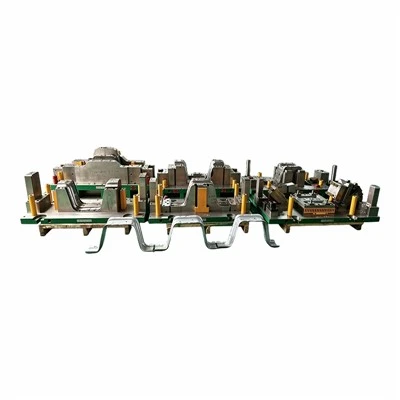
First, let’s cut through the jargon: fatigue is that slow, sneaky wear from thousands of tiny, repeated bends or pulls, right? For stamping parts, that’s usually from engine vibrations, road bumps, or the constant shift of heavy battery packs in EVs. The worst part? It doesn’t happen overnight; most failures start with a tiny crack you can’t see until it’s too late. So, let’s break down what we’ve actually implemented at our shop to beat it, no fluff included.
Start at the source: the raw material. We used to grab whatever steel was cheapest, but that’s where we wasted a ton of cash and headache. Now, we only work with high-strength low-alloy (HSLA) steels or dual-phase (DP) steels, but not just any grade. For example, DP 980 is great for structural parts like control arms, but for thinner stamped brackets that hold wiring in EVs, we switch to a softer HSLA grade that can stretch more without cracking during stamping. Wait, I know what you’re thinking—softer steel? Doesn’t that break easier? No, if you pick the right one, it forms a more even grain structure, not that messy, brittle grain you get with cheap low-carbon steel. We also test every batch for “yield strength uniformity” before we even start stamping. A while back, we got a shipment where some coils were 10% weaker than specs, and we caught it early—would’ve saved us 20 hours of rework and 5 bad parts if we’d skipped the test. For EV-specific parts, aluminum alloys are popping up too, like 6061-T6, which is lighter and has way better fatigue resistance than steel for things like EV chassis mounts. But here’s a pro tip: never use uncoated aluminum. Even a tiny scratch from stamping can turn into a stress point, so we add a thin zinc coating or anodize the parts before assembly.
Next, stamping process tweaks that most suppliers sleep on. A lot of shops crank up press speed to get more parts out, but that’s a huge mistake for fatigue. We used to run 15 strokes per minute for door hinges, now we drop it to 10. Slow stamping gives the material time to flow evenly instead of shearing, which creates those sharp internal stress lines that turn into cracks later. We also adjusted our die clearance—way too tight, and the material gets crushed; too loose, and it wrinkles, both bad. For control arms, we used to run a 0.1mm clearance, now it’s 0.15mm, and we got a 12% drop in post-production fatigue tests. Another big one: deburring. Those sharp, ragged edges left from stamping are the #1 stress point. We used to hand-debur, which was inconsistent, so we added a vibratory tumbler with ceramic media for 10 minutes post-stamp. It’s not fancy, but every part comes out with a smooth edge now, no exceptions. For small, intricate parts like terminal brackets, we use a micro-blasting process with glass beads to smooth edges without warping tiny parts.
Then there’s the post-stamping heat treatment. A lot of suppliers skip this, thinking stamping alone is enough, but heat treatment is like resetting the material’s internal stress. We use stress-relief annealing, not full hardening, because full hardening makes parts too brittle. For EV battery tray brackets, we heat parts to 200°C for 2 hours, then let them cool slowly—this removes 80-90% of the stress from stamping, and our fatigue test cycles jumped from 120,000 to 220,000 before failure. We also avoid quenching hard; once we almost ruined a batch of strut mounts by quenching too fast, which left tiny cracks we missed until field failures. Lesson learned: slow, even heating is way better than quick fixes.
Wait, what about design? Even the best material and process can’t save a bad design. We started working with our in-house design engineer 3 years ago, and the first thing he changed was part geometry. Sharp corners in stamped parts = stress magnets. We added radii to every corner—even a 2mm radius on a 1mm thick part makes a huge difference. For a battery mount bracket, we used to have a 1mm corner that failed 30% of the time, now it’s a 5mm radius, and failures are near zero. We also added “lightening holes” only where the stress is low, not random—those holes can cause stress points if they’re not positioned right. We test every design with finite element analysis (FEA) before we even run a prototype, but we don’t just rely on computers—we bench-test prototypes for 500,000 cycles on our fatigue rig, which is way more than most clients’ requirements. That rig saved us last year: we caught a hidden stress point in a motor mount design before it went into full production, which would’ve cost us $50k in rework if we’d missed it.
Oh, and surface finish. It’s not just for looks. We used to leave parts with a mill finish, which is slightly rough, and road salt and moisture would get into tiny scratches, causing corrosion that eats away at the material from the inside. Now, we add a powder coating or e-coat for parts that are exposed to the elements. For EV parts, we use a special EV-grade e-coat that’s thinner than standard, so it doesn’t add extra weight (which is critical for EV range), but still blocks corrosion. We also test corrosion resistance with a salt spray test—48 hours in the chamber, no rust spots, before a part leaves our shop. That’s a step that a lot of small suppliers skip, but it’s a huge part of fatigue resistance, right? Corrosion and fatigue work together—corrosion creates pits that turn into cracks, cracks get worse when the material vibrates, and boom, failure.
Wait, I know some of you might be thinking, “That sounds expensive.” But let’s do the math: a $0.50 better steel grade, a $0.10 tumbling process, saves you from a $50 warranty claim on a failed part. Last quarter, we implemented all these changes, and our field failure rate for stamping parts dropped 28%—that’s less rework, happier clients, and less money spent fixing mistakes. For EVs specifically, battery packs add a ton of weight, so fatigue is even more critical because the parts are under constant load. A lot of EV stamping parts are for battery enclosures, motor mounts, and chassis components, so they have to hold up to not just road stress, but also the weight of the battery, which can be 1,000 lbs or more.
Another quick tip for small-volume runs: if you’re making a custom stamping part for an EV prototype, don’t cut corners on tooling. We once tried to use a cheap die for a prototype bracket, and it left inconsistent edges that caused 20% of test failures. Now, we invest in a medium-grade die, not the super expensive aerospace grade, but not the $500 import die either. It’s worth it for the first run, because you don’t have to re-stamp a whole batch when the prototype fails.
At the end of the day, improving fatigue resistance isn’t about using the fanciest materials or the most complex machines. It’s about paying attention to every tiny step: picking the right steel, smoothing edges, adjusting die clearance, fixing those sharp corners. For us, as an automotive and EV stamping parts supplier, that’s how we stand out—we don’t just stamp parts, we make parts that last.
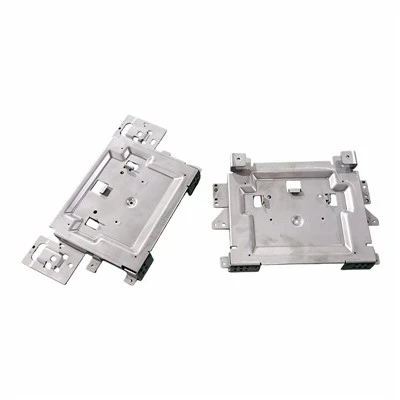
If you’re working on a new EV or automotive project, whether it’s a prototype or full production, and you need stamping parts that won’t fail on the road, hit us up to talk through your needs. We’ll send over our fatigue test data, work with you on design tweaks, and make sure your parts hold up for years. Don’t wait until you have a field failure to fix it—let’s get it right the first time.
Progressive Dies References
- ASTM International. (2020). Standard Test Method for Fatigue Testing of Metallic Materials.
- Automotive Industry Action Group (AIAG). (2021). Advanced High-Strength Steel Application Guidelines for Stamping Processes.
- Journal of Materials Processing Technology. (2022). Effect of Stamping Process Parameters on Fatigue Life of Dual-Phase Steel Components.
- Society of Automotive Engineers (SAE). (2019). Fatigue Resistance Requirements for EV Structural Stamping Parts.
Dongguan Changdong Tool & Die Co., Ltd.
With abundant experience, we are one of the most reliable automotive & ev stamping parts manufacturers and suppliers in China. Please feel free to buy advanced automotive & ev stamping parts made in China here from our factory. Good service and quality products are available.
Address: No. 56-B, Fumin South Road, Dalang Town, Dongguan City, Guangdong Province, China
E-mail: sales@stamping-die.com
WebSite: https://www.metalstampingdie.com/
