Hey there, let’s cut to the chase. If you’re here scrolling because you’re deep in the weeds picking a cap mold for your production line—chances are you’ve already wasted enough time on duds that crack too early, leak, or take forever to swap out. As a cap mold supplier who’s been deep in this game for almost 15 years, I’ve seen brand new production managers burn through budgets, old heads swear by the wrong mold type because “that’s how we’ve always done it,” and even small-batch startups accidentally order molds too big or too small that derail their first launch. This isn’t rocket science, but it’s not guesswork either. Let’s break this down like we’re hanging out in my workshop, not sitting in some stuffy conference room. Cap Mold
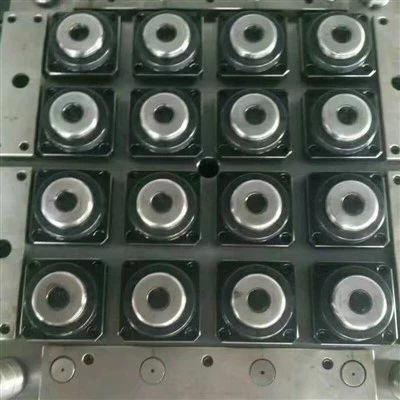
First off, let’s get super specific about what a cap mold actually does for you, because too many people skip this part and jump straight to “what material?” A cap mold isn’t just a block of metal with shapes cut out—It’s the thing that turns melted plastic (or even aluminum, depending on your caps) into the final cap, right on your injection molding machine’s platen. Mess up the mold, and you get caps that don’t screw on right, have flash (that annoying excess plastic ring you have to trim), or can’t pass leak tests. I’ve had a client call me at 2 a.m. once, panicking because their first batch of 50,000 sports caps were leaking because their cheap mold warped mid-run. That’s the kind of headache we’re here to avoid.
The first big question you need to ask yourself before even looking at molds: what kind of caps are you making? I don’t care if it’s a water bottle cap, a soda cap, a cosmetic jar lid, or a industrial chemical cap—each one has totally different requirements. Let’s run through the most common types, no jargon. If you’re making thin-walled caps for bottled water, that’s a whole different ballgame than thick, heavy-duty caps for antifreeze or prescription bottles. Thin-walled molds need to be super precise because you’re dealing with barely any plastic material, so even a 0.1mm misalignment means a cap that leaks. Thick caps, on the other hand, need more draft angle (that tiny slant on the inside of the cap) so they pop off the mold easily, and the mold needs to handle more pressure during injection. Oh, and if you’re making tamper-evident rings—those little bands that snap off when you open a bottle? Your mold has to have intricate core pins for that, not just a basic cavity. I once had a startup skip talking about tamper rings because they thought it was an afterthought, and they had to reorder a whole new mold a week before launch. Don’t do that.
Next up: material of the mold itself. This is where most people cut corners and regret it later. There are three main types I work with daily, and each has a place. First is P20 steel—this is the workhorse, the mold material I recommend for 90% of small to medium production runs, up to like 1 million caps. It’s affordable, easy to machine, and holds up pretty well to regular use. I use P20 for most of my client base because it’s flexible—if you need to tweak a cap design mid-run, P20 molds are way easier to modify than pricier options. Then there’s S7 steel, which is tougher, more resistant to wear, great for high-volume runs—like 2 million caps or more. If you’re a big soda brand pumping out 100k caps a week, S7 is the way to go because it won’t get scratches or dents from repeated injection cycles. The downside? It’s more expensive, so don’t waste money on S7 if you’re only making 50k caps total. The third option is aluminum molds—super lightweight, way cheaper than steel, but only for prototype runs or very small batches, like less than 10k caps. If you’re testing a new cap design, an aluminum mold gets the job done without dropping a ton of cash, but don’t even think about using it for full production. I tell all my prototype clients: make your aluminum mold, test 10k caps, tweak the design, then switch to steel for full production. No exceptions.
Wait, hold on—let’s talk about precision. This is the part that separates a good mold from a garbage one. You can have the perfect material, but if the mold isn’t machined to within 0.005mm of tolerance, your caps will be garbage. What’s tolerance? Basically how much the mold can be off and still make a good cap. For thin-walled caps, tolerance is way stricter than for thick ones. I check every single mold I send out with a coordinate measuring machine (CMM) because if I don’t, the client is going to have caps that don’t fit their bottles, or flash that’s impossible to trim. Last year, I had a client who ordered a mold from a supplier overseas that was 0.02mm off on the cavity, and their caps wouldn’t screw on at all. They paid half the price, but ended up having to scrap 20k caps and buy a mold from me anyway. Lesson there: precision isn’t something you skip to save money.
Then there’s the number of cavities in the mold. Cavities are the number of caps the mold can make in one injection cycle. So a 16-cavity mold makes 16 caps every time your machine injects plastic, a 32-cavity makes 32, etc. This is a big one because it directly ties to your production speed and cost. If you’re a small brand doing 10k caps a month, a 4-cavity or 8-cavity mold is perfect—you don’t need to pump out 32 caps at once, and a lower cavity count is cheaper. But if you’re a big brand doing 1 million caps a month, a 32 or 48-cavity mold cuts down your cycle time, so you need fewer machines, which saves labor and electricity costs. Wait, but here’s the catch: more cavities don’t always mean better. If your mold has too many cavities for your machine size, you’ll get uneven plastic flow—some caps will be over-injected, some under-injected, leading to waste. I once had a client who tried to cram a 64-cavity mold into a machine that was way too small, and he was wasting 20% of the plastic every cycle because the pressure couldn’t reach the outer cavities. I helped him switch to a 32-cavity mold, and his plastic waste dropped by 18% within a week. That’s the kind of thing I live for—saving my clients money by not pushing them too hard on cavity count.
Oh, and don’t forget about ejection systems. Ejection is how the caps get pushed out of the mold after they’re formed. There are two main types: pin ejection and sleeve ejection. Pin ejection is the basic one—small pins that push on the inside of the cap. It’s cheap, works fine for most caps, but if you’re making smooth, glossy caps (like cosmetic jars), the pins leave tiny marks on the cap that you can’t sand out. For glossy caps, you need sleeve ejection, which pushes along the outer edge of the cap, no marks. I always ask my cosmetic clients first about glossy finish, because pin ejection would ruin their product’s look. Another thing: if you’re making caps with deep designs (like logos that are recessed or raised), you need ejection that’s strong enough to get the cap out without deforming it. I’ve seen a client with fancy embossed logo caps use the wrong ejection, and half their caps came out twisted because the ejection pins couldn’t push evenly. That’s a quick fix once you know to ask about it.
Wait, let’s talk about something most suppliers don’t tell you: maintenance and after-sales support. A mold isn’t a set-it-and-forget-it thing. Every so often, you need to clean the cavities, replace worn parts, maybe do a small tweak if your plastic resin changes. If you buy a mold from some random overseas supplier that doesn’t have a local support team, you’re screwed when something breaks. I’m based here, so if one of my clients has a mold issue at 2 p.m., I can have a tech at their facility by 5, no waiting on shipping parts from across the world. Also, make sure the supplier offers a warranty on the mold material and machining—like at least 1 year for normal use. I had a client once whose mold’s core pin broke at 800k cycles, and the supplier he bought from told him he was on his own, because “wear and tear isn’t covered.” With me, that core pin would have been replaced for free under warranty, no questions. That’s the difference between a real supplier and a middleman.
Let’s run through a quick example to put all this together, because I know you’re probably zoning out a bit. Let’s say you’re a new craft soda brand, making 200k bottles a month, each with a 28mm thin-walled cap that has a tamper-evident ring, and glossy finish. What do you need? First, since you’re producing 200k a month, that’s medium volume—so P20 steel is perfect, not too expensive, easy to modify if you tweak your cap design. Cavity count: a 16-cavity mold, that’s enough to get your production speed up without straining your machine. Ejection system: sleeve ejection, because those caps need to be glossy, no pin marks. Tamper-evident core pins, obviously. And since you’re a new brand, you probably need support getting set up with the mold, testing the first run, so make sure the supplier offers that kind of hand-holding. Don’t go for a 48-cavity S7 steel mold—way too expensive for your current volume, and overkill. Don’t go for an aluminum mold—you’ll wear it out at 200k cycles. That’s the kind of bad call I see all the time.
Wait, another thing: resin compatibility. Different plastic resins (PET, HDPE, PP, even aluminum for specialty caps) have different melting points and flow properties. Your mold has to be designed for the resin you’re using. If you’re using HDPE for thicker caps, the mold needs slightly different draft angles than if you’re using PP for thin-walled caps. I always ask clients what resin they’re using before even touching the design—swap resins mid-run, and the mold might not work right. Last year, a client switched from PET to PP for their water caps because it’s cheaper, and their old mold (designed for PET) had issues with flash because PP flows differently. They called me, I tweaked the mold’s temperature controls for PP, and they were back up and running in no time. If the supplier doesn’t ask about your resin, that’s a red flag—they’re just cranking out generic molds, not custom ones for your needs.
Let’s wrap this up, because I don’t want you scrolling all night trying to figure this out. The biggest takeaway is: don’t pick a mold based on price alone. Pick it based on your specific production volume, cap design, resin type, and long-term goals. Cheap molds lead to more downtime, more scrap, more money spent later when you have to replace them. A good mold is an investment that will pay you back in consistent production, less waste, and fewer headaches.
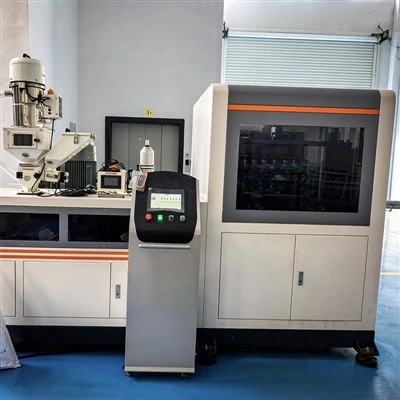
If you’re ready to stop guessing and get a mold that works for your brand, whether you’re a small startup just launching your first batch or a big company scaling up production, hit us up for a no-pressure chat. We’ll walk through your specific needs, break down options that fit your budget, and make sure you don’t make the mistakes I’ve seen hundreds of other clients make. No sales pitch, no jargon, just real advice from someone who’s been in the cap mold game for decades and cares about your success as much as his own.
Cap Mold References: Plastic Mold Engineering Handbook, Injection Molding Technology for Caps and Closures, Industrial Cap Manufacturing Best Practices, Modern Steel Mold Design for High-Volume Production.
Taizhou Koni Mould Co., Ltd.
As one of the most professional cap mold manufacturers and suppliers in China, we also support customized service. Please feel free to wholesale high quality cap mold made in China here from our factory. For pricelist, contact us now.
Address: No. 97 Jinju Road, Chengjiang Subdistrict, Huangyan District, Taizhou City, Zhejiang Province
E-mail: kn@kenimould.com
WebSite: https://www.kenimouid.com/
