If you’ve ever stood on the side of a Muay Thai gym or a jiu-jitsu mat, wondering if that extra gi in your gear bag can pull double duty, you’re not alone. As a jiu-jitsu gi supplier who’s listened to dozens of athletes hash this out after training, I’ve seen it work, and I’ve also seen it cause some avoidable headaches. Let’s break this down: when can a gi work for Muay Thai, when is it a bad idea, and what you need to know to keep training safe and effective. Jiu Jitsu Gis
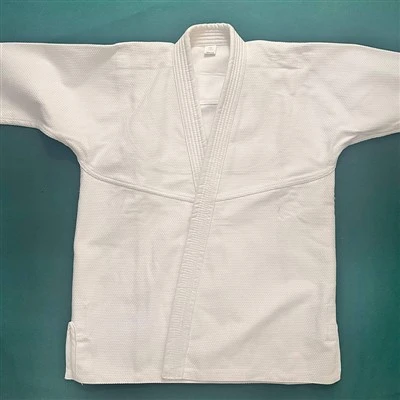
First, let’s ground this in what each piece of gear is designed for. A traditional Brazilian jiu-jitsu gi (or “kimono,” as many purists call it) is thick, sturdy, and built to withstand constant gripping, pulling, and wrestling during BJJ rolls. Most gis use a dense cotton blend—often 10oz, 12oz, or even 14oz canvas for competition quality—with reinforced stitching on the collar, sleeves, and belt loops to hold up against thousands of grip attempts. Muay Thai gear, by contrast, is lightweight, flexible, and built for striking: shorts, wraps, and rash guards are designed to move with kicks, knees, and elbows, not to resist being grabbed. That core design gap is where most of the debate comes from.
Let’s start with the times wearing a gi for Muay Thai might actually make sense. For many athletes, especially those just starting out, carrying separate gear for two different disciplines is a hassle. If you’re training BJJ four days a week and Muay Thai two, wearing a gi to those Muay Thai sessions can cut down on gear cost and storage—no need for a separate pair of Muay Thai shorts you’ll only pull out twice a week. There’s also the practicality of a gi’s long sleeves: if you’re still learning to avoid stray elbows from training partners, a thick gi sleeve can offer a little extra protection from bruising or scrapes on your arms, especially during light sparring. I’ve also heard from newer fighters that the tight fit of a gi (adjusted with your belt) helps them feel more anchored during clinch work, a core part of Muay Thai that translates surprisingly well to BJJ’s standing game.
But here’s where the line gets fuzzy, and where a lot of athletes run into problems. The biggest issue with using a standard BJJ gi for Muay Thai is the collar. A gi’s collar is thick, rigid, and designed to be grabbed repeatedly in BJJ, but that same rigidity makes it a nightmare for Muay Thai clinch work. When you’re clinching to throw knees or control your opponent, you need movement—your collar should slide easily, not act like a stiff board that locks you in place. I’ve seen athletes pull a muscle in their neck trying to twist their head free from a gi collar, or accidentally elbow their partner too hard because they can’t reposition their upper body properly. There’s also the thickness: a 12oz gi holds way more sweat than a typical Muay Thai rash guard, and if you’re training for 90 minutes straight, that heavy, wet fabric will weigh you down, slow your movements, and even cause chafing under the arms or around the waist after a while.
Another common myth: some athletes think a gi’s durability makes it better for rough clinch work, but that’s not the case. Muay Thai clinching isn’t just pulling and holding—it’s constant faking, repositioning, and breaking your opponent’s grip, movements that are designed for lightweight gear. A gi’s thick fabric resists those small, quick shifts, so you’ll end up expending way more energy trying to adjust your position than you would with proper Muay Thai gear. I remember a customer who emailed me a few years back saying he’d worn his competition gi to Muay Thai sparring, only to drain halfway through the round from just managing the gi’s bulk. That’s the kind of inefficiency that makes trainers cringe—wasting energy that should go into strikes and defense, not fighting your own gear.
Now, let’s talk about the scenarios where a gi might actually work better than standard Muay Thai gear. Wait, that’s not a typo—it’s not all bad. If you’re training in a gym that’s strict about grappling (both standing and ground work) and you do light clinch sparring, a lightweight gi might fit the bill. Not all gis are heavy: there are “travel gis” or “competition lightweight gis” that use thinner cotton (8oz or even 7oz) for easier movement. These gis are designed for athletes who commute, don’t want to carry extra gear, and do most of their training in BJJ, with only occasional Muay Thai clinch work. For that group, a lightweight gi can offer just enough protection for ground work while being flexible enough to avoid the bulk of a heavy gi. I’ve sold hundreds of these gis to fighters who do both disciplines, and most say they work fine for occasional Muay Thai, as long as they’re not doing full-contact sparring.
There’s also the safety angle for newer athletes. If you’re still learning to control your strikes during Muay Thai sparring, a gi’s extra layer can reduce the chance of your elbow or knee making direct contact with your partner’s skin, which is a big plus for gyms that don’t require shin guards or extra protective gear for beginners. Just keep in mind that this only applies to light, controlled sparring—once you move to full Muay Thai drilling, that extra layer won’t protect against hard strikes, and the gi’s bulk will become a liability.
Now, let’s get to the practical tips if you do decide to wear a gi for Muay Thai training. First, never use a brand-new, stiff gi for Muay Thai. Break it in first by wearing it to BJJ rolls for a week or two—wash it a few times to soften the fabric and loosen the collar. A stiff gi collar is the single biggest cause of discomfort and injury, so breaking it in is non-negotiable. Second, adjust your belt correctly. A gi that’s too loose will ride up during clinch work, while a belt that’s too tight will restrict your breathing. Tie your belt snug enough that the gi stays in place, but not so tight you can’t take full breaths when you throw a kick or knee.
Third, choose the right gi for the job. Avoid heavy, 14oz competition gis for Muay Thai—stick to 8oz or 9oz lightweight gis if you’re going this route. These are designed to be more flexible, so they’ll move with you instead of against you. If you have a rash guard, wear that under the gi to reduce chafing—gi fabric is absorbent, and sweat sitting against your skin for an hour will cause rashes or blisters if you don’t have a moisture-wicking layer underneath. I always recommend this to my customers who double up on disciplines; it’s a small step that makes a huge difference in comfort.
And if you’re a trainer reading this, don’t ban gi use outright—just set clear rules. For beginners, allow it for light clinch drilling to build confidence, but require a switch to Muay Thai shorts and rash guard once they move to sparring. For advanced fighters, encourage them to invest in separate gear if they’re training multiple times a week, but acknowledge that there’s no one-size-fits-all rule.
Now, let’s address the elephant in the room: what about gi-less Muay Thai gear for BJJ? That’s a whole other conversation, but for the sake of this topic, the reverse doesn’t work nearly as well. A gi’s design is specific to gripping, so trying to use Muay Thai gear for BJJ would mean you can’t grab your opponent’s gi for takedowns or submissions, which defeats half the purpose of BJJ. But when it comes to Muay Thai, the gi is a middle ground that works for some, not for others.
As someone who’s been in the gi business for years, I’ve seen both sides: athletes who swear by their gi for both disciplines, and athletes who refuse to wear it for Muay Thai at all. The common thread between the happy ones? They did their research, chose the right gi, and adjusted their training to account for the gear’s limitations. The ones who had bad experiences? They grabbed their oldest, stiffest competition gi and showed up to a 90-minute sparring session without a second thought.
If you’re still on the fence, here’s a quick test: next time you train Muay Thai, throw on your gi for the warm-up and 15 minutes of light clinch work. Pay attention to how your body feels—are you moving freely, or is the collar or sleeves holding you back? If it works, great—you can keep using it for occasional sessions. If not, it’s worth investing in a pair of lightweight Muay Thai shorts and a rash guard.

At the end of the day, the goal of any training gear is to help you perform, not hinder you. For many fighters, a jiu-jitsu gi can serve as a convenient, cost-effective option for Muay Thai, as long as you’re realistic about its design and limitations. If you’re a gym owner or an athlete looking for gis that work for both BJJ and occasional Muay Thai training, we offer a range of lightweight, durable options designed to hold up to both disciplines without sacrificing flexibility. Reach out to our team to discuss your training needs and find the right gi for your setup.
Jiu Jitsu Gis References
- International Brazilian Jiu-Jitsu Federation. Competition Gi Specifications and Guidelines. 2022.
- World Muay Thai Council. Standard Training Gear Requirements. 2021.
- Journal of Sports Sciences. The Effect of Clothing Weight on Endurance and Movement Efficiency in Combat Sports. 2020.
- American Council on Exercise. Chafing Prevention for Combat Athletes. 2019.
Qingdao Chido Sports Products Co., Ltd.
As one of the most experienced jiu jitsu gis manufacturers in China, we’re featured by quality products and good price. We warmly welcome you to wholesale bulk cheap jiu jitsu gis made in China here from our factory. Contact us for custom service and free sample.
Address: 360 Minxin Street, Qingdao, Shandong, China
E-mail: info@636med.com
WebSite: https://www.chidosports.com/
