If you’re in the sheet metal game, you’ve probably heard the phrase “laser cutting” thrown around nonstop lately—everyone’s raving about how it’s replaced plasma cutters, punch presses, even some waterjet setups for precision work. But here’s the thing: not all laser cutters are created equal. I’ve been selling these machines for almost a decade, and I can’t tell you how many times a new customer comes in saying, “I just need something that cuts steel fast.” Then they get a demo, and go, “Wait, that’s it?” Because the “fast” part is table stakes now. The cutting edge quality? That’s the stuff that actually makes or breaks your parts, your turnaround time, and your bottom line. Sheet Metal Laser Cutting Machine
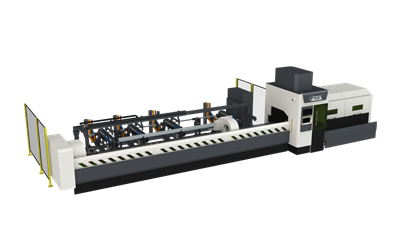
Let me start with the first thing people notice but don’t fully understand: the cut edge itself. If you’ve ever seen a bad laser cut, you know it’s rough, has burrs you have to grind off, and maybe even a slight taper on the sides. A good one? It’s a smooth, consistent edge—no post-processing needed, or at least barely any. The science behind that comes down to a few key components: the fiber laser source, the nozzle design, and the cutting gas pressure. Wait, I know “fiber laser source” sounds like jargon, but hear me out. A lot of cheaper machines use old CO2 lasers, which are fine for thick, rough cuts, but fiber is where the magic is right now. Fiber lasers generate a tighter, more focused beam—like, the spot size is 0.1mm or smaller, vs. a CO2’s 0.2mm. That tight beam melts or vaporizes the metal so cleanly, there’s almost no dross left behind. Dross is that leftover tiny metal blob you have to scrape off after cutting, right? With a top-tier fiber setup, you can cut 16-gauge stainless steel, 12-gauge aluminum, even ½-inch mild steel, and pull the part off the table without grinding. That’s a game-changer for shops that do high-volume runs—no more dedicating 2 guys to deburr 100 parts a day.
Next up, the automation that’s actually useful, not the useless “conveyor belt” add-ons you see on cheap machines. Wait, let’s talk about real-time process monitoring. A lot of modern laser cutters have sensors that track the beam’s power, the gas flow, the nozzle condition, even the temperature of the cutting zone, mid-cut. If there’s a micro-burr on the nozzle that’s throwing the beam off, or a speck of dust that’s messing up the gas pressure, the machine doesn’t just keep cutting garbage parts—it adjusts on the fly, or even stops before ruining a sheet. I had a customer last year who was running custom electrical enclosures, and he told me he was scrapping 5-7 sheets a week because of bad cuts. We swapped his old 5-year-old machine for our latest model, and he cut that scrap rate to under 1 sheet a month. That’s tens of thousands of dollars saved, just from the monitoring feature. No fancy training needed, either—our guys walk your operator through it in an hour, tops.
Then there’s the versatility that doesn’t sacrifice quality. A lot of people think “cutting edge quality” only applies to perfect, simple shapes, but what about tiny, intricate parts? Like, think about a bracket for a drone with 0.5mm gaps, or a medical device component with curved edges that need to fit perfectly. A cheap laser will “kerf” wider than it’s supposed to on thin material, meaning those tiny gaps will be off, and the part won’t assemble right. Our machines have a dynamic beam calibration feature that adjusts the spot size slightly depending on material thickness. So when you’re cutting 20-gauge aluminum, it uses a smaller spot for tight tolerances, and when you’re cutting ¼-inch steel, it widens the spot just enough to cut through fast without losing precision. I had a aerospace client come to me because their old machine couldn’t cut a series of 0.3mm holes in titanium without burring. We had their operator tweak the calibration for titanium, and they’re now doing that run 3x faster than before, with zero post-processing on the holes.
Wait, let’s get into something that’s easy to overlook but makes a huge difference: the machine’s frame rigidity. You might think “how does a big heavy frame affect the cut?” But if the frame flexes even a little when the beam is moving fast (like when you’re cutting a long, straight line or a big shape that requires moving the gantry across the table), the beam tilts just enough to create that taper I mentioned earlier. A lot of budget machines use lightweight aluminum frames to cut costs, but we build ours with heavy-duty steel castings and a rigid gantry system that flexes less than 0.02mm at full speed. That means the cut edge is straight, not tapered, even on parts that are 4 feet long. So when you’re assembling a cabinet with those cut panels, the sides line up perfectly—no sanding, no shimming to make gaps even. A customer of ours does custom food equipment, and he used to have to plane the edges of his 4-foot stainless steel side panels before welding, just to get them to fit. Now he does that step maybe once a month, vs. every panel before.
And let’s talk about uptime, because that’s a huge part of “cutting edge quality” too. A machine that cuts great but breaks down every other day is useless, right? The best laser cutters have low-maintenance parts—no expensive nozzle replacements every week, sealed fiber sources that last 100,000 hours (that’s like 10 years of full-time use), and automated nozzle cleaning so you don’t have to manually scrub the nozzle every shift. I know guys who run 2 shifts a day, 5 days a week, and their only maintenance is a quick filter change every 3 months. That’s not just convenient—it means you can take on more jobs without worrying about downtime. A friend of mine who runs a small fab shop went from 8-hour turnaround on a 50-sheet order to 3 hours after switching to our machine, because he wasn’t losing 2 hours a day fixing his old cutter.
Wait, I don’t want to make it sound like every new machine is perfect, either. A lot of shops get suckered into “bargain” models from overseas, and they end up with a machine that cuts great for a month, then the nozzle starts clogging, the calibration drifts, and they can’t get parts for it because the manufacturer went out of business. Our machines have local support teams, so if something does go wrong, we’re there within 24 hours, no waiting for parts from Asia. That’s part of the quality too—you don’t just buy a machine, you buy a support system.
Let me wrap this up. When people ask me what makes a sheet metal laser cutter’s cutting edge quality, I don’t talk about specs on a sheet of paper. I talk about the part that comes off the table ready to use, no grinding, no sanding. I talk about the guy who used to scrap a sheet a week now keeping every one. I talk about the small shop that turned around orders 3x faster because their machine didn’t break down mid-run.

If you’re tired of dealing with machines that just “cut metal” instead of cutting quality parts that make your shop money, hit us up for a demo. We can bring a sample of your material, run a test cut, and show you exactly how that edge looks, no fine print, no sales pitch that’s too good to be true. Let’s talk about what your shop actually needs, not what we can upsell you on.
Laser Welding Machine References:
- Optical Society of America. (2022). Fiber Laser Beam Focusing and Cut Edge Quality in Thin Metal Sheet Processing. Journal of Laser Applications, 34(2), 022001.
- American Society for Mechanical Engineers. (2021). Rigidity and Dynamic Performance of Laser Cutting Machine Frames for Precision Fabrication. Journal of Manufacturing Science and Engineering, 143(8), 081005.
- FabTech International. (2023). 2023 State of the Sheet Metal Fabrication Industry: Cutting Technology Benchmark Report. FabTech Publications.
Suzhou Quick Laser Technology Co., Ltd.
Suzhou Quick Laser Technology Co., Ltd. is one of the most professional sheet metal laser cutting machine manufacturers and suppliers in China, featured by quality products and good price. Please feel free to buy durable sheet metal laser cutting machine for sale here from our factory. For more information, contact us now.
Address: No. 6, Qingqiu Street, Industrial Park, Suzhou, Jiangsu Province, China
E-mail: info@qlteklaser.com
WebSite: https://www.qlteklaser.com/
