Hey there! I’m a supplier of space capsules, and I’ve been getting a ton of questions lately about how we protect these high – tech marvels from micrometeoroids. So, I thought I’d sit down and write this blog to give you all the lowdown on the topic. Space Capsule
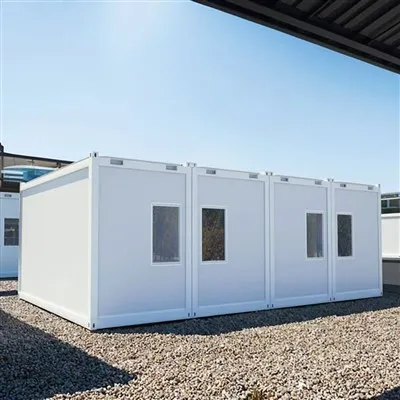
First off, what are micrometeoroids? Well, they’re tiny pieces of rock and metal that are flying around in space at super high speeds. Some are as small as a grain of sand, but don’t let their size fool you. When they’re zooming through space at thousands of miles per hour, they can do some serious damage to a space capsule.
One of the oldest and most tried – and – true methods we use to protect our capsules is the Whipple shield. It’s named after Fred Whipple, a really smart guy who came up with the idea in the 1940s. The Whipple shield is basically a multi – layer system. The outermost layer is a thin sheet of material, usually aluminum. When a micrometeoroid hits this layer, it breaks up into a cloud of debris. Then, there’s a gap between the outer layer and the next layer. This gap gives the debris cloud time to spread out. By the time the debris reaches the next layer, which is called the rear wall, it’s less concentrated and doesn’t pack as much of a punch. So, the rear wall can withstand the impact more easily.
We also use more advanced versions of the Whipple shield, like the multi – shock shield. This one has even more layers and gaps, which makes it even better at protecting the capsule. The idea is to break up the micrometeoroid into smaller and smaller pieces and spread them out as much as possible before they reach the critical parts of the capsule.
Another thing we do is use self – healing materials. These are pretty cool. They’re designed in such a way that if a micrometeoroid creates a small hole or crack in the material, it can fix itself. Some of these materials work by having tiny capsules of healing agents inside them. When the material is damaged, the capsules break, and the healing agent fills the hole or bond the crack back together.
We also use armored blankets in some cases. These blankets are made of strong, flexible materials like Kevlar. They can absorb the impact of a micrometeoroid and spread the force over a larger area. Think of it like a bulletproof vest for the space capsule. We can wrap these blankets around the parts of the capsule that are most vulnerable, like the windows or areas where important equipment is located.
Now, it’s not just about the physical shields and materials. We also use advanced sensors and prediction systems. Our sensors are constantly on the lookout for micrometeoroids. They can detect the size, speed, and trajectory of these little guys in real – time. Once we know where a micrometeoroid is headed and how fast it’s going, we can use the capsule’s thrusters to move it out of the way if necessary.
Our prediction systems are also really important. They look at historical data and current space conditions to predict where micrometeoroids are likely to be. For example, if there’s a known meteor shower coming up, we can analyze the path of the debris and make sure the capsule is in a safe place during that time.
We also work closely with space agencies and other experts in the field. They do a lot of research on micrometeoroids, like studying their composition and behavior. We use this information to improve our protection methods. We test our capsules in simulated space environments, too. In these tests, we shoot tiny particles at the capsule at high speeds, just like a micrometeoroid impact, to see how the capsule and its protection systems hold up.
When we’re designing a space capsule, we take into account every possible scenario. We know that micrometeoroids can come from any direction, so we make sure that the entire capsule is protected. We don’t just focus on the outer skin of the capsule either. We also protect the internal systems. For example, we use shielding inside the capsule around the electronics and life – support systems. This way, even if a micrometeoroid manages to get through the outer layers, it won’t knock out the critical systems.
We’ve come a long way in the technology of protecting space capsules from micrometeoroids. When I first started in this business, the Whipple shield was pretty much the only game in town. But now, with all the new materials and advanced systems we have, we can offer a much higher level of protection.
If you’re in the market for a space capsule, whether you’re a government space agency looking to send astronauts on a mission, a private space startup with big dreams, or even an organization interested in space research, we’ve got you covered. Our space capsules are designed with the latest and greatest micrometeoroid protection technology. We’re constantly evolving and improving our methods to make sure that our capsules are as safe as possible in the harsh environment of space.

I know you might have a lot of questions. Maybe you’re wondering about the cost, or how our protection systems compare to other suppliers. That’s where we can have a nice chat. We’d love to have a discussion with you about your specific needs and how our space capsules can meet them. Just reach out to us, and we can start a conversation about a potential partnership. I’m confident that once you learn more about what we can offer, you’ll see that we’re the right choice for your space capsule needs. Let’s work together to explore the final frontier safely!
Standard Apple Cabin References
- "Fundamentals of Space Systems" by Vincent L. Pisacane
- "Spacecraft Structures and Mechanics" by Pino L. Nicolai
- Papers from the International Astronautical Federation on micrometeoroid protection
Aoborui Seiko Technology (Weifang) Co., Ltd.
As one of the most professional space capsule manufacturers and suppliers in China, we also support customized service. Please feel free to wholesale high-grade space capsule made in China here from our factory. Welcome to view our website for more information.
Address: Building 38, Zhongnan High-tech, Weifang Yuandu Huizhi Industrial Park, No. 3999, Taixiang Street, Hanting District, Weifang City, Shandong Province
E-mail: admin@sino-abr.com
WebSite: https://www.sinoabr.com/
