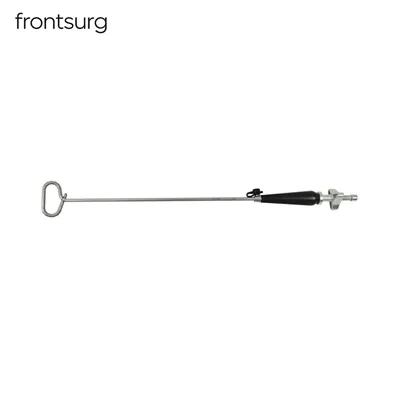
Hey there, folks! As a supplier in the suturing and knotting game, I’ve seen it all when it comes to different types of wounds. And one of the trickiest situations we often deal with is contaminated wounds. You know, those wounds that have been exposed to dirt, bacteria, or other yucky stuff. So, I thought I’d share some insights on the best suture materials for suturing and knotting in these kinds of wounds. Suturing and Knotting
First off, let’s talk about what makes a contaminated wound different. Contaminated wounds are at a higher risk of infection compared to clean wounds. That means we need to choose suture materials that not only hold the wound together but also minimize the risk of bacteria growing and causing trouble.
One of the top choices for contaminated wounds is absorbable sutures. These are great because they break down over time in the body, so there’s no need for a second visit to have them removed. This is especially important in contaminated wounds since leaving foreign material (like non – absorbable sutures) in the wound for a long time can increase the risk of infection.
Some of the most common absorbable suture materials are Vicryl and Monocryl. Vicryl is a braided suture made from a copolymer of glycolide and lactide. It has good tensile strength, which means it can hold the wound edges together firmly. And it starts to lose its strength gradually over a few weeks, which is just right for the healing process of most contaminated wounds.
Monocryl, on the other hand, is a monofilament absorbable suture. It’s made from poliglecaprone 25. The monofilament design has less surface area for bacteria to stick to compared to braided sutures. This is a big plus in contaminated wounds. It also has a smooth surface, which makes it easier to pass through the tissue and tie knots. And it retains its strength for a decent amount of time during the early stages of wound healing.
Another option is PDS (Polydioxanone) sutures. These are also absorbable, but they have a longer absorption time compared to Vicryl and Monocryl. They’re strong and have a low tissue reactivity. This means they cause less irritation in the wound, which is great when you’re dealing with a contaminated area. PDS sutures are often used in deeper layers of the tissue in contaminated wounds, where a longer – lasting suture support is needed.
But what about non – absorbable sutures? Well, they do have their place in contaminated wounds too. Sometimes, we might use non – absorbable sutures in combination with absorbable ones. For example, if we need a really strong and long – term closure in a specific part of the wound, a non – absorbable suture might be the way to go.
Nylon is a popular non – absorbable suture material. It’s strong and has a smooth surface, making it easy to handle and knot. It’s also relatively inexpensive, which is always a plus. But the downside is that it stays in the body indefinitely. So, in a contaminated wound, there’s a risk of it becoming a nidus for infection. That’s why we usually try to remove nylon sutures as soon as the wound has healed enough to hold on its own.
Silk is another non – absorbable suture. It has good handling properties and ties knots well. However, it’s more porous than nylon, which means bacteria can more easily adhere to it. So, in contaminated wounds, we need to be extra careful when using silk sutures. We might use them for superficial closures where they can be removed quickly.
Now, let’s talk about knotting. The type of suture material you choose also affects how you tie the knots. For absorbable sutures like Vicryl and Monocryl, you need to make sure the knots are secure but not overly tight. These sutures are a bit more elastic than some non – absorbable ones, so you need to adjust your knot – tying technique accordingly.
When using non – absorbable sutures like nylon or silk, you can get a bit more aggressive with the knotting. But still, you don’t want to cause too much tissue damage. A good rule of thumb is to tie enough throws to make the knot secure, but not so many that you’re strangling the tissue.
In addition to the suture material itself, we also need to think about the coating on the sutures. Some sutures come with an antibacterial coating. This can be a game – changer in contaminated wounds. The coating helps to kill or inhibit the growth of bacteria around the suture, reducing the risk of infection.
As a suturing and knotting supplier, I know that choosing the right suture material for contaminated wounds can be a bit of a balancing act. You need to consider factors like the depth and location of the wound, the patient’s overall health, and the expected healing time. But by understanding the properties of different suture materials, you can make a more informed decision.
If you’re in the medical field and dealing with contaminated wounds on a regular basis, I’d love to have a chat with you. We can discuss your specific needs and see how our range of suturing and knotting products can help you. Whether you’re looking for absorbable sutures, non – absorbable ones, or sutures with special coatings, we’ve got you covered.
So, if you’re interested in learning more or want to start a conversation about purchasing our products, don’t hesitate to reach out. We’re here to support you in providing the best care for your patients with contaminated wounds.
Endoscopes References:
- Kronlage, D. E., & Howard, R. J. (2017). Suture materials and wound closure. Surgery (Oxford), 35(11), 566 – 572.
- Wu, C. J., Lowry, A. C., & Sheng, Y. (2019). Trends in wound – edge approximation: A review of suture materials and devices. Journal of Surgical Research, 236, 253 – 262.
Frontmed (Hangzhou) Trading Co., Ltd.
Frontmed (Hangzhou) Trading Co., Ltd. is one of the most experienced suturing and knotting equipment manufacturers and suppliers in China, also supports custom service. Please rest assured to wholesale high quality suturing and knotting equipment made in China here from our factory. Contact us for more details.
Address: Room 406, Building 6, No.1688 Chunjiang East Rd, Tonglu, 311500, Hangzhou
E-mail: alex@frontsurg.com
WebSite: https://www.frontsurg.com/
