If you’ve ever worked in electroplating, metal finishing, water treatment, or even the production of certain chemicals, you know how much of a bottleneck electrode corrosion can be. I’ve been supplying titanium anodes to industrial teams for over a decade, and one question I hear more than any other is: “What makes titanium anodes so much more corrosion-resistant than the alternatives?” It’s not just a marketing buzzword. It’s a material property that’s saved our customers millions in replacement costs, downtime, and safety risks over the years. Let’s break down what makes titanium’s corrosion resistance unique, why it matters for your operation, and how we tailor our anodes to fit your specific needs. Titanium Anodes
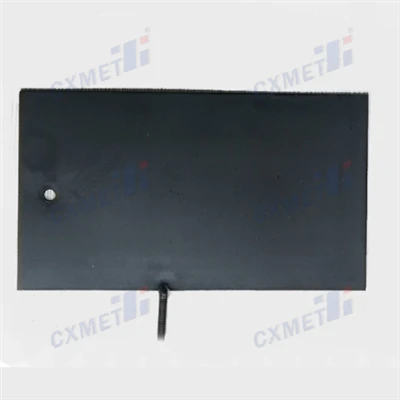
First, let’s get the basics right. Most common electrode materials—like lead, graphite, even some stainless steels—corrode when exposed to the harsh, acidic, or oxidizing environments that are standard in industrial electrochemical processes. Corrosion here isn’t just pitting or wear; it’s the anode breaking down into particles that contaminate your product, reduce process efficiency, and force you to shut down lines to replace parts. Lead anodes, for example, leach toxic lead ions into plating baths, which is not only bad for compliance but also ruins high-value parts like automotive trim or aerospace components. Graphite anodes wear down so quickly that you’re replacing them every few months, if not every few weeks.
Titanium avoids this problem because of something called a passive oxide layer. When pure titanium comes into contact with oxygen—even just the oxygen dissolved in water, or oxygen from the air—it instantly forms a thin, transparent layer of titanium dioxide (TiO₂) on its surface. This layer is only a few nanometers thick, but it’s extremely dense, chemically inert, and adheres firmly to the underlying titanium substrate. Unlike the rust that forms on steel, which flakes off and exposes new metal to corrosion, this TiO₂ layer is self-healing. If it gets scratched or damaged (say, from a process current or a minor physical impact), new titanium instantly reacts with nearby oxygen to regrow the layer in milliseconds. That’s the core of titanium’s corrosion resistance.
But here’s the thing: pure titanium alone isn’t enough for most electrochemical applications. The passive TiO₂ layer is great for neutral and slightly acidic environments, but in very strong acids, highly oxidizing solutions, or at high current densities (common in processes like anodizing or chlor-alkali production), pure titanium can start to corrode. That’s why we coat our titanium anodes with advanced, proprietary oxide coatings— things like mixed metal oxides (MMOs), ruthenium oxide, iridium oxide, or platinum group metals (PGMs)—that build on titanium’s natural strength and extend its corrosion resistance even further.
Let’s dive into the technical side of that to make it real. For example, if you’re using anodes in a sodium chloride solution to produce chlorine gas (for water treatment or chemical manufacturing), you need a material that can withstand extreme oxidizing conditions and high currents. A pure titanium anode would corrode here within days, but a titanium anode coated with ruthenium oxide has a service life of 5 to 10 years. That’s not a typo. We’ve had a municipal water treatment plant in the Midwest that’s been using our coated titanium anodes for 12 years without a full replacement of the anode set. Their old graphite anodes needed to be changed twice a year, costing them over $150,000 annually in parts and labor. Our anodes cut that cost to less than $20,000 a year, and they haven’t had a single contamination incident in that time.
Another example: electroplating of metals like nickel, copper, or chrome. Chrome plating baths are highly acidic (often with sulfuric acid and chromic acid) and operate at high temperatures. Stainless steel anodes corrode here, leaching iron ions that make the chrome plate look dull and uneven. Lead anodes leach lead, which is a health hazard and fails EPA regulations. Our titanium anodes, coated with a combination of iridium and tantalum oxides, don’t leach any harmful ions, resist pitting even in the harshest chrome baths, and last 3 to 5 times longer than lead alternatives. A plating shop in the Southeast told us that their reject rate for chrome parts dropped by 18% after switching to our anodes, because there were no trace metal contaminants ruining the finish.
What makes our titanium anodes different from the cheap imports you might find online? A lot of suppliers cut corners on the coating, or use lower-grade titanium that doesn’t form a strong passive layer in the first place. We source only Grade 2 or Grade 5 titanium, the most common and corrosion-resistant grades for electrochemical use, and we apply our coatings using thermal decomposition, a process that fuses the oxide layers directly to the titanium substrate instead of just spraying them on. That means the coating won’t peel off even at high current densities or when the anode is exposed to thermal shock (like when you flush a process line with cold water mid-run). We also test every anode before it leaves our facility to ensure that the coating is uniform, no pinholes, and that the passive layer is intact—something many overseas suppliers skip entirely.
Now, you might be wondering: does titanium anodes have any weak spots when it comes to corrosion? The short answer is, almost none, as long as you pair them with the right coating for your process. The only environments where we wouldn’t recommend titanium are highly reducing, non-oxidizing acids at high temperatures—like concentrated hydrochloric acid at temperatures above 100°C. In those cases, even our special coatings won’t hold up, and we’d recommend a different material like niobium. But for 90% of the electrochemical processes our customers run, titanium anodes are the most corrosion-resistant, cost-effective option on the market.
Let’s also talk about long-term value, not just upfront cost. A lot of shop managers see titanium anodes that cost 3 or 4 times more than lead or graphite anodes and hesitate. But when you do the math, it adds up. Let’s say you need a set of anodes for a 10,000-liter electroplating line. A lead anode set costs $2,000, and needs to be replaced every 6 months, so that’s $4,000 a year. A graphite set costs $1,500, replaced every 3 months, so $6,000 a year. Our titanium anode set costs $7,000, and lasts 5 years, so that’s $1,400 a year. That’s a 65% reduction in annual anode costs, plus you save on labor for replacement, reduce production downtime (time the line isn’t running costing you thousands in lost revenue), and eliminate contamination-related rejects. For a high-volume operation, that adds up to six or seven figures in savings every year.
We also work closely with every customer to tailor our anodes to their specific process. If you’re running a small anodizing line for aluminum parts, we can use a lower-cost coating that’s perfect for your acid bath. If you’re running a large-scale chlor-alkali plant, we can design custom-sized anodes with specialized coating layers that handle high current densities without corrosion. We don’t do one-size-fits-all, because we’ve seen too many customers waste money on anodes that don’t fit their exact needs.

If you’re tired of dealing with corroding electrodes, contaminated products, and the hassle of constant anode replacement, let’s talk. Our team has over 15 years of experience in the titanium anode industry, and we can help you find the right solution for your process, no matter how big or small. Whether you’re just testing titanium anodes for the first time or looking to replace a whole line of aging electrodes, we can provide samples, technical support, and competitive pricing that fits your budget.
3D Printing Metal Material References:
- D. Landolt, “Electrochemical corrosion of titanium and titanium alloys,” Elsevier, 2007.
- A. J. Bard and L. R. Faulkner, “Electrochemical Methods: Fundamentals and Applications,” 2nd ed., John Wiley & Sons, 2001.
- Titanium and Titanium Alloys, ASM International, 2002.
- L. L. Shreir, R. A. Jarman, and G. T. Burstein, “Corrosion: Materials and Methods,” 3rd ed., Butterworth-Heinemann, 2000.
Shannxi CXMET Technology Co., Ltd.
As one of the most professional titanium anodes manufacturers and suppliers in China, we also support customized service. Please feel free to buy high-grade titanium anodes for sale here from our factory. Good service and quality products are available.
Address: 191 Integer Rd, 2nd StrLA 08219, P.R China.
E-mail: sales@cxmet.com
WebSite: https://www.cxmetanode.com/
