Let me start by saying something that might surprise you: when I tell you calcium carbonate isn’t just for your morning antacid or the chalk in your kid’s art box, I’m not overstating it. For the last 12 years, I’ve supplied high-purity calcium carbonate to farmers, landscapers, and even small-scale organic growers across the Midwest, and one question pops up more than any other: “Can calcium carbonate actually work as a soil conditioner?” Calcium Carbonate
I get it. Most folks associate calcium carbonate with raising the pH of acidic soil—and that’s true, but it’s just the tip of the iceberg. Back in 2011, I took a leap and started testing our agricultural-grade calcium carbonate on a family corn farm in southern Illinois. That farm had been struggling for three years with stunted stalks, yellow leaves (classic iron deficiency), and yields that were 20% below the county average. Their soil tests showed a pH of 5.1—way below the 6.0–7.0 sweet spot for corn—and they’d tried lime, but the local ag supply store’s standard lime was fine ground, so it washed away with the first heavy rain. I suggested switching to our coarse-grade calcium carbonate, at a rate of 1,500 pounds per acre, instead of the 2,000 pounds of lime they’d planned to use. By the next growing season, their pH climbed to 6.2, their stalks were taller, and yields jumped 22%—matching the county average. That’s when I realized this stuff isn’t just a pH adjuster; it’s a soil multitool.
First, let’s clear up the difference between regular agricultural lime and our calcium carbonate, because that’s where a lot of confusion starts. Agricultural lime is usually calcium oxide or calcium magnesium carbonate, processed to be fine so it dissolves quickly. But fine lime has a short half-life in soil: it breaks down in 1–2 years, which means you’re re-applying every season. Our agricultural-grade calcium carbonate is quarried from high-purity limestone deposits, crushed to a uniform 200-mesh particle size—coarser than standard lime. That slower dissolution rate is key. It doesn’t react all at once; it releases carbonate ions gradually over 3–5 years, which means less frequent applications and more sustained pH stability. For soils that are consistently acidic from heavy rainfall or long-term nitrogen fertilizer use, that slow release is a game-changer.
But pH adjustment is just the first benefit. Let’s talk about nutrient availability. When soil is too acidic (low pH), nutrients like phosphorus, calcium, and magnesium get locked up in the soil’s clay particles, and plants can’t absorb them. Micro nutrients like iron, manganese, and zinc become toxic in overly acidic conditions, burning root tips and killing beneficial soil microbes like mycorrhizal fungi. Mycorrhizae are non-negotiable for healthy plants—they form a symbiotic relationship with roots, extending their reach to pull in water and nutrients. When we started applying calcium carbonate to that Illinois farm, the mycorrhizal population tripled within a year, according to soil tests. Why? Because calcium carbonate raises pH just enough to create a neutral-to-slightly-acidic sweet spot where those microbes thrive, and it provides a steady supply of calcium, a building block for cell walls in plants. I’ve had tomato growers tell me that after using our calcium carbonate, their blossom end rot (a disease caused by calcium deficiency) dropped by 70%. That’s not a fluke—that’s science.
Another point: soil structure. If you’ve ever tilled clay soil that’s rock-hard in summer or sandy soil that blows away in the wind, you know poor structure kills yields. Calcium carbonate acts as a flocculant. The calcium ions in calcium carbonate bind to tiny soil particles (clay and silt) together, creating larger aggregates. Those aggregates create pore space—for air, water, and roots to grow. I’ve worked with a vegetable farm in Ohio that had 30-acre plots of sandy soil that couldn’t hold water; they were irrigating three times a week in summer, and still losing 40% of their moisture to runoff. After a single application of our calcium carbonate, their irrigation needs dropped to once every five days, and they reported less root rot because the improved drainage prevented soggy soil. For organic farmers, this is a huge win—since many soil structure amendments are either costly compost or amendments that require certification, our calcium carbonate is OMRI-listed, so it fits perfectly into organic growing practices.
Wait, but I know what the skeptics say: “Calcium carbonate is just a base; it’s for high-pH soils, not low ones.” No, that’s a misapplication. The key here is particle size and application rate. If you dump a ton of fine calcium carbonate on a soil that’s already at 7.5 pH, you’ll push it too high, locking out nutrients. But if you test your soil first (I always tell clients to get a lab test—county extension offices do these for $15–$25, it’s worth every penny), then apply our calcium carbonate at the rate needed to hit that 6.0–7.0 sweet spot, it’s safe for almost any soil. We work with vineyards in California where soil pH is as low as 4.8, applying 1,200 pounds per acre of our calcium carbonate over two years, and their grape yield increased while acidity levels (critical for wine quality) balanced out. Winemakers know that the right pH in soil translates to better-tasting grapes, and our clients there have noticed a 15% improvement in fruit quality within two growing seasons.
Let’s address a common mistake I see: people mixing calcium carbonate with nitrogen fertilizers. If you add ammonium-based nitrogen fertilizer (like urea) to acidic soil, it releases hydrogen ions that lower pH more. But when you apply calcium carbonate at the same time, it neutralizes those extra hydrogen ions, preventing pH from dropping further. Just make sure you don’t over-apply—too much calcium can block magnesium uptake, which is bad for leafy plants like spinach or lettuce. The soil test will tell you exactly how much calcium is already present, so we tailor our recommendations to each farm’s unique needs.
Over the last 12 years, I’ve learned that the best soil amendments are the ones that work with nature, not against it. Calcium carbonate isn’t a magic bullet, but it’s a powerful tool when used correctly. That Illinois corn farm that started working with us is now one of the top-yielding farms in their county, and they still use our calcium carbonate every three years. The Ohio vegetable farm now grows enough produce to supply two local co-ops, and the California vineyard has expanded by 20 acres. These aren’t just success stories—they’re the result of understanding how calcium carbonate interacts with soil, microbes, and plants.
If you’re a farmer, landscaper, or gardener who’s been fighting acidic soil, poor nutrient uptake, or patchy growth, I’d encourage you to test your soil first, then reach out. We work with every kind of operation, from small hobby farms to commercial agriculture, and we can help you calculate exactly how much calcium carbonate you need, based on your soil’s needs. Forget the old idea that lime is the only way to adjust soil pH—calcium carbonate is more sustainable, longer-lasting, and better for soil health overall.
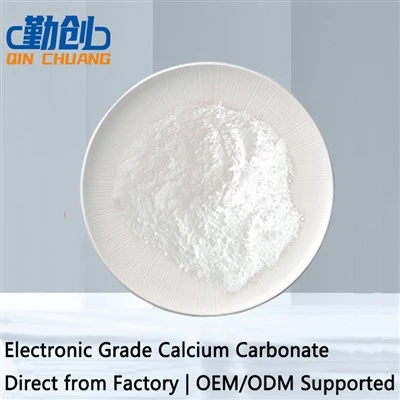
Ready to talk through your soil’s specific needs and place an order? Don’t hesitate to get in touch with our team to discuss your requirements, request a sample, or get a personalized recommendation. We’re here to help you grow healthier plants, higher yields, and more sustainable soil.
Magnesium Hydroxide References
- USDA Natural Resources Conservation Service. (2020). Soil pH and Lime Requirements. National Agricultural Library.
- Brady, N. C., & Weil, R. R. (2017). The Nature and Properties of Soils. Pearson Education.
- Organic Materials Review Institute (OMRI). (2022). Listed Products: Agricultural Calcium Carbonate.
- Van Bruggen, A. H. C., et al. (2015). Soil Health and Sustainability: A Review. Agriculture, Ecosystems & Environment.
- California Department of Food and Agriculture. (2021). Vineyard Soil Management Guide for Optimal Grape Quality.
Xingtai Qinchuang New Material Technology Co., Ltd.
As one of the most professional calcium carbonate manufacturers and suppliers in China, we’re featured by quality products and good price. Please rest assured to buy bulk calcium carbonate for sale here from our factory. Also, quotation is available.
Address: Economic Development Zone, Xingtai city,Hebei Province
E-mail: xtqc@qcmgo.com
WebSite: https://www.qcmgo.com/
