Hey everyone, it’s [Your Name], and I’ve been working as a T-Bulb LED supplier for almost 8 years now—so when people ask me if these bulbs are actually good for the planet, I get it. It’s not just a random question; there’s so much noise out there about “green” tech, and half the time it’s hard to tell what’s fact and what’s marketing hype. Today, I’m breaking this down straight, no fluff, because I sell these bulbs every day, but I also live in a small town where I worry about what we leave behind for the next generation. LED T-Bulb
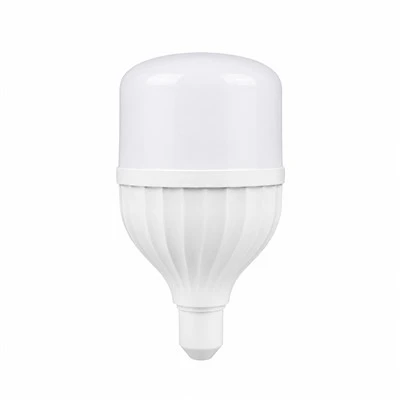
First, let’s talk energy—this is the big one that everyone brings up. Old incandescent bulbs? They’re basically space heaters that happen to give off light. A 60W incandescent uses 60 watts every second it’s on, and 90% of that energy turns into heat, not light. So if you leave a 60W bulb on for an hour, you’re wasting 54 watts just keeping your space warm. Compare that to our T-Bulb LEDs: a similar amount of light (around 800 lumens) only uses 9-12 watts. That’s 80% less energy. Wait, let’s do the math quick—if someone replaces 10 bulbs in their house, that’s a 500W old setup vs. 100-120W LED. Over a year, that’s like skipping 1,000 hours of a 400W space heater running. Less energy use means less demand on power plants, which is huge because most electricity still comes from fossil fuels in a lot of places. I see this every month when customers tell me their electric bills dropped—one guy even saved $150 last year just from swapping out his kitchen lights. But here’s the thing: it’s not just homes. Offices, warehouses, factories? They run hundreds, even thousands of bulbs. A manufacturing plant I supply saves thousands on energy a quarter, and that means fewer coal or gas units running, which cuts down on carbon emissions. No one argues that’s a win for the environment.
But wait, what about disposal? That’s the other side people fixate on. Old compact fluorescents (CFLs) have mercury, which is a big no—if you break one, you have to air out a room for hours before cleaning it up, and you can’t just toss them in the trash because that mercury ends up in landfills and leaches into soil or water. LEDs? Do they have any bad stuff? Sure, a tiny bit of lead and copper, way less than CFLs or even old incandescents (incandescents have glass, but no—wait, no, let me correct that: incandescents don’t have heavy metals, but they burn out way faster, so you’re replacing them way more, which means more bulbs in landfills over time. CFLs have ~4mg of mercury, which is enough to contaminate 1,000 gallons of water, per EPA data. LEDs have less than 0.1mg of heavy metals total. That’s basically nothing. Now, I know people say “LEDs take energy to make” so that offsets the savings. Let’s check that: the “embodied energy” of a bulb—meaning the energy used to mine materials, build, ship it. A T-Bulb LED has an embodied energy of around 150 kWh. The energy savings over its lifespan? A standard LED lasts 25,000 hours, while an incandescent lasts 1,000 hours. So over 25,000 hours, one LED replaces 25 incandescents. The incandescents would use 60W x 25,000 hours = 1,500 kWh. The LED uses 10W x 25,000 = 250 kWh. The embodied energy of the LED is 150, so net savings is 1,500 – (250 + 150) = 1,100 kWh. That’s a massive difference. Even if you count disposal, LEDs are way easier to handle now—most cities have e-waste programs, and we even offer a take-back program for our old bulbs if customers want to recycle them properly. I can’t tell you how many times a customer brought in a bag of old CFLs they were scared to throw away, swapped them for LEDs, and now brings back their old stuff to recycle. It’s a small step, but it adds up.
Another point: wait times and maintenance. I run a commercial supply side too, so warehouses and construction sites are regulars there. If you’re running a factory floor that’s on 24/7, changing bulbs every month with incandescents is a nightmare. Not only do you pay for the bulbs, you pay for labor—someone has to climb ladders, shut off power, do the swap. LEDs last so long (20+ years for commercial grade, basically) that you’re not touching them. For a big warehouse with 10,000 bulbs, that’s 10,000 less bulbs in landfills over 20 years, and zero labor costs for bulb changes. That’s not just good for their bottom line, it’s less waste going to landfills. I’ve had a grocery client who said they cut their bulb waste by 95% just switching to our T-Bulb LEDs. Old grocery stores would go through 500 bulbs a month, now they go through 25. That’s a huge reduction in plastic and glass from the bulbs.
But hold on—are there any downsides? Let’s be real, no tech is perfect. Some cheaper LEDs (the ones from no-name brands you see on Amazon for $1 each) use worse materials, have shorter lifespans, and some even have blue light issues that might affect eye health, but that’s not an environmental issue so much as a user one. Also, a small percentage of LEDs end up in landfills where they don’t get recycled, but that’s a problem with recycling infrastructure, not the bulb itself. The good LEDs (like the ones we supply) are built to last, and the industry is getting way better at designing them for recyclability. We make our bulbs with easy-to-take-apart parts—no glue holding the circuit board to the base, so recyclers can separate the metal, plastic, and glass easily. A lot of people don’t know that, but that’s a big reason our bulbs are better than the cheap ones. I tell all my customers: don’t buy the $1 bulb from a random site, buy a T-Bulb that’s rated for 25,000 hours, because the extra $2 upfront is nothing compared to the energy and waste savings over time.
Wait, let’s talk about carbon emissions specifically. The EPA says that lighting is about 15% of total electricity use in the U.S. If every home and business switched to LEDs, that would cut U.S. electricity use by 10% total, right? Because lighting is such a big chunk. That’s a massive drop in carbon dioxide, sulfur dioxide, and nitrogen oxide emissions. Those are the pollutants that cause smog, acid rain, and climate change. I work with a local school district that switched all their auditorium, hallway, and playground lights to our LEDs. They cut their annual carbon emissions from lighting by 12 tons—like taking 2 cars off the road for a year. That’s not a tiny number; that’s a real impact.
But what about rare earth metals? I’ve seen people online panic that LEDs use rare earths like neodymium, which are mined in ways that hurt the environment. That’s true for some tech, but T-Bulb LEDs? Wait, no—the phosphors in some LEDs use small amounts, but way less than, say, a smartphone. And mining practices are getting better, plus we’re starting to recycle rare earths from old bulbs now. We actually partner with a recycling company that takes our end-of-life bulbs and extracts the rare earths to make new ones, so it’s a closed loop. Less new mining means less habitat destruction, less water pollution from mining runoff. That’s a point most people miss— it’s not just the materials going in, it’s how we reuse what’s already there.
Let’s also think about the full cycle, not just one bulb. Let’s do a simple example: a household that uses 20 bulbs, all incandescents. Over 10 years, that’s 20 bulbs a year x 10 = 200 bulbs. That’s 200 glass/metal bulbs in landfills, using 60W each, so 60 watts x 4 hours a day = 876 kWh a year per bulb, x 20 bulbs = 17,520 kWh total over 10 years. Now swap to our LEDs: 20 bulbs, 10W each, same 4 hours a day, that’s 1,460 kWh a year. Over 10 years, that’s 14,600 kWh saved, minus the embodied energy of our two LED bulbs (since each lasts 20 years, so 2 bulbs over 10 years) which is 300 kWh. Net: 14,300 kWh saved, and only 2 bulbs in landfills instead of 200. That’s insane. Even if the embodied energy was higher, the savings are way more. The math doesn’t lie.
I also hear people say “what about the energy used to make the bulbs in other countries?” Wait, but that’s global. If we’re reducing energy use worldwide, that cuts emissions everywhere, no matter where the bulb is made. And most LED manufacturers (including us) are using renewable energy in their factories now. We power our assembly line with solar panels on the roof, so the energy used to make our T-Bulbs is 100% from the sun, not coal or gas. That’s another thing no one talks about—we’re not just selling a bulb, we’re making it with less impact upfront.
But let’s be honest, there’s a catch: if you buy a cheap LED that burns out in 6 months, you’re not saving anything. You’re buying 4 bulbs a year, so the waste adds up, and the energy use is similar to a good LED, maybe even higher. That’s why I always tell people to stick to reputable suppliers. We test every single T-Bulb we sell, make sure they last the full rated lifespan, and our warranty is 5 years. If it breaks in 2 years, we replace it no questions asked. That’s how we stand by our environmental claims—no cutting corners on materials to make a quick buck.
Now, let’s wrap this up. Are LED T-Bulbs environmentally friendly? Yes, but not all of them. The cheap, no-name ones might be better than incandescents, but they don’t hit the mark on waste or energy savings. The high-quality, long-lasting ones like the ones we supply? They’re one of the easiest, most impactful swaps you can make for the planet. You save money on bills, reduce waste, cut emissions—no downside, really.
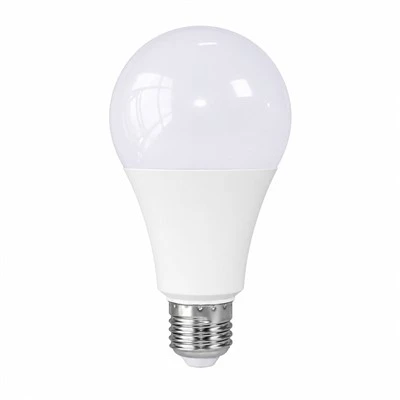
If you’re a business owner, facility manager, or even a homeowner looking to make the switch, hit us up. We can send samples, talk through your space, and give you a quote for bulk orders. It’s a small step, but together, we can make a big difference.
LED Round Bulb References
- U.S. Environmental Protection Agency. (2022). Solid Waste Management and Greenhouse Gases: A Life-Cycle Assessment of Emissions and Sinks.
- Department of Energy. (2021). Lighting Energy Savings Potential of Light-Emitting Diodes (LEDs) in Residential and Commercial Applications.
- International Energy Agency. (2023). Global LED Lighting Market and Environmental Impact Report.
- National Institute of Standards and Technology. (2020). Heavy Metal Content in Residential Lighting Products.
Hangzhou Lin’an Mingfeng Electric Parts Co., Ltd.
We are one of the most experienced LED t-bulb manufacturers and suppliers in China since 1996. We warmly welcome you to wholesale customized LED t-bulb made in China here from our factory. If you have any enquiry about pricelist and quotation, please feel free to email us.
Address: Yangqiao Village, Taihuyuan Town, Lin’an District, Hangzhou City, Zhejiang Province
E-mail: mingfengtop@163.com
WebSite: https://www.mingfengtop.com/
